03/11 — 08/22/22
Gallery 5. Level 2
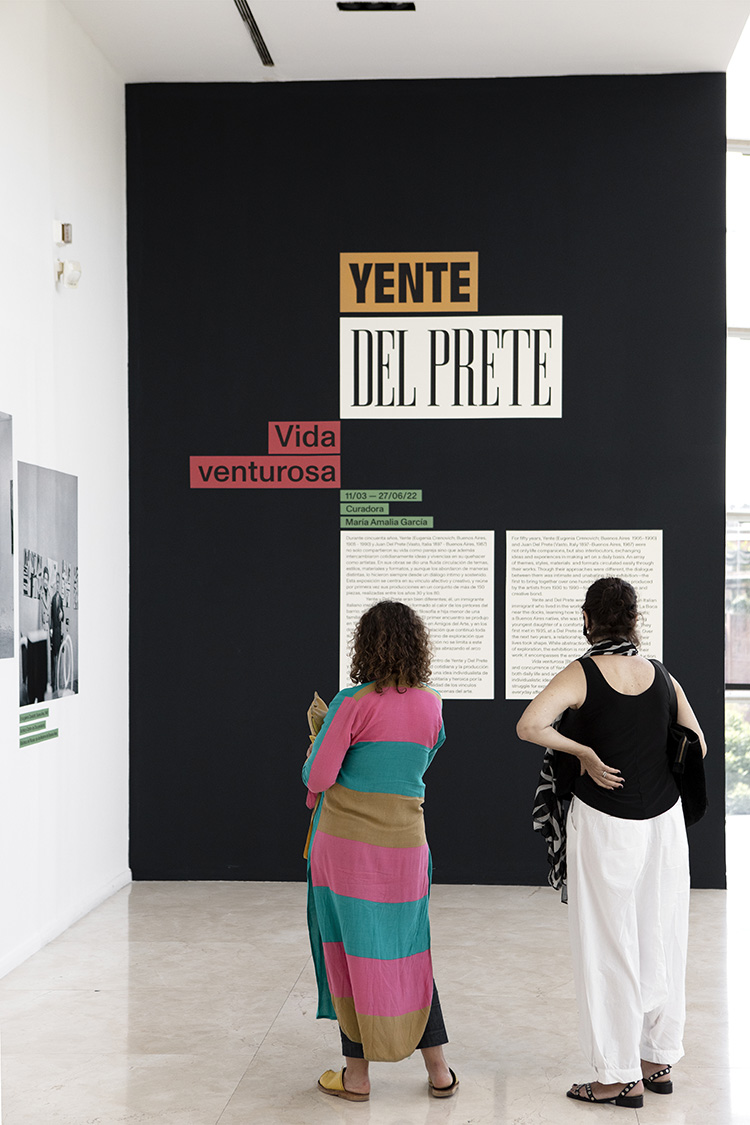
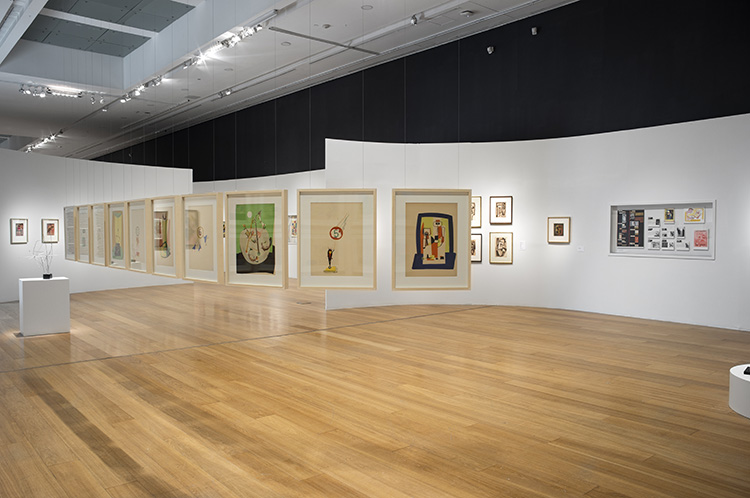
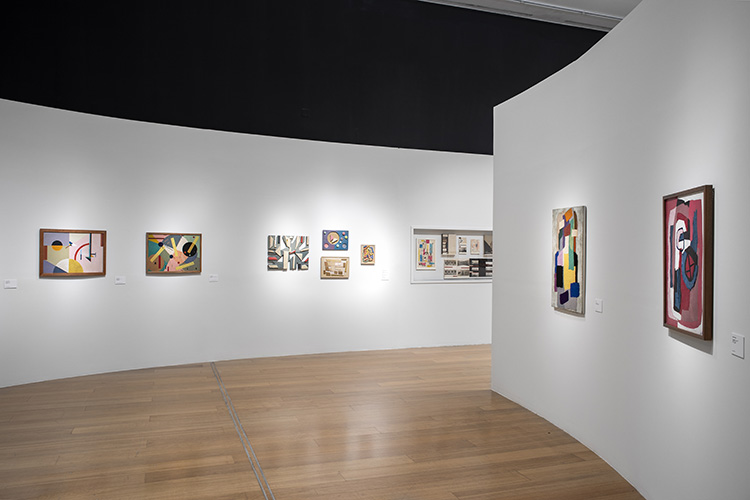
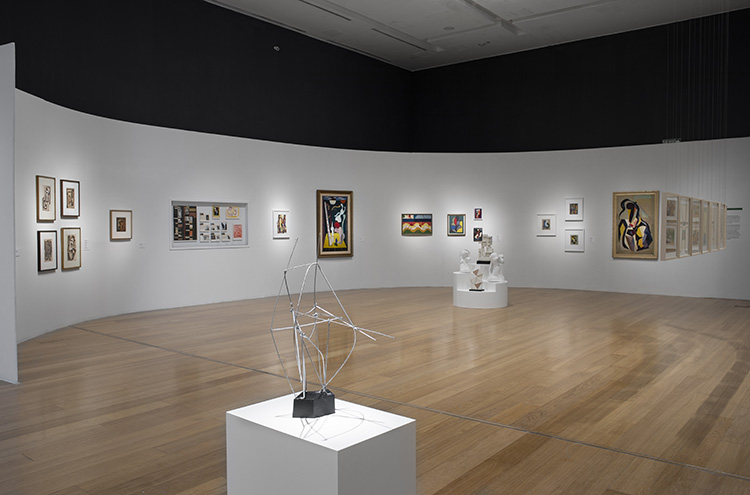
An exhibition dedicated to the work of Yente (Eugenia Crenovich, Buenos Aires 1905 – 1990) and Juan Del Prete (Vasto, Italy, 1897 – Buenos Aires, 1987), which focuses on the creative synergy of the couple and the loving bond as a way of approaching the artistic practice.
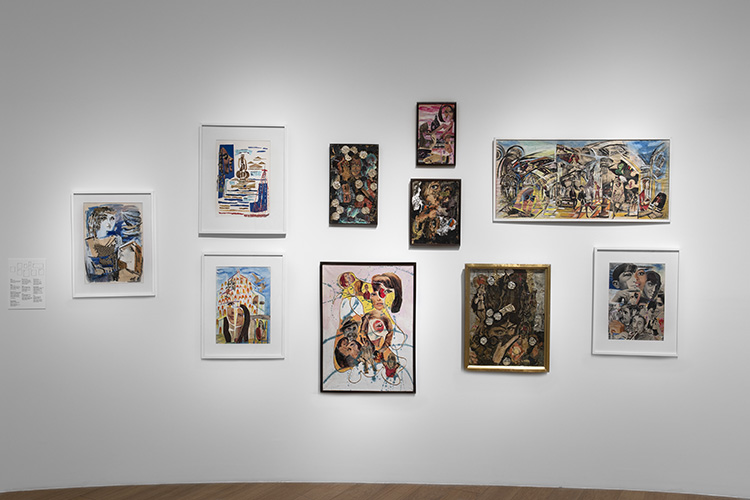
For fifty years, Yente and Juan Del Prete were not only life companions, but also interlocutors, exchanging ideas and experiences in making art on a daily basis. An array of themes, styles, materials, and formats circulated easily through their works.
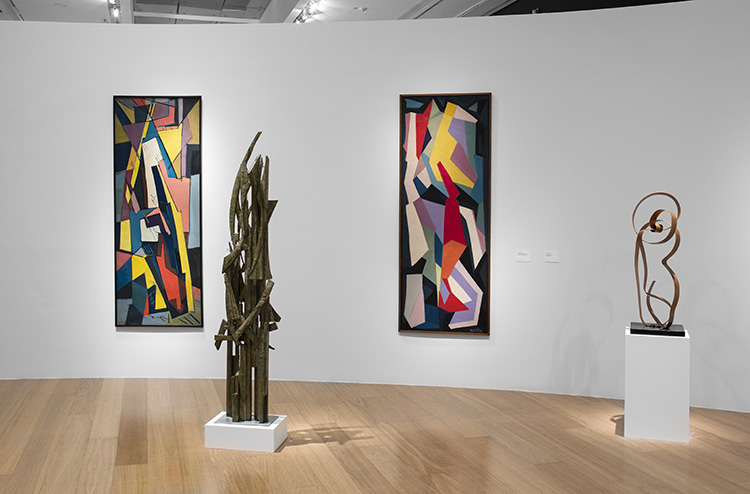
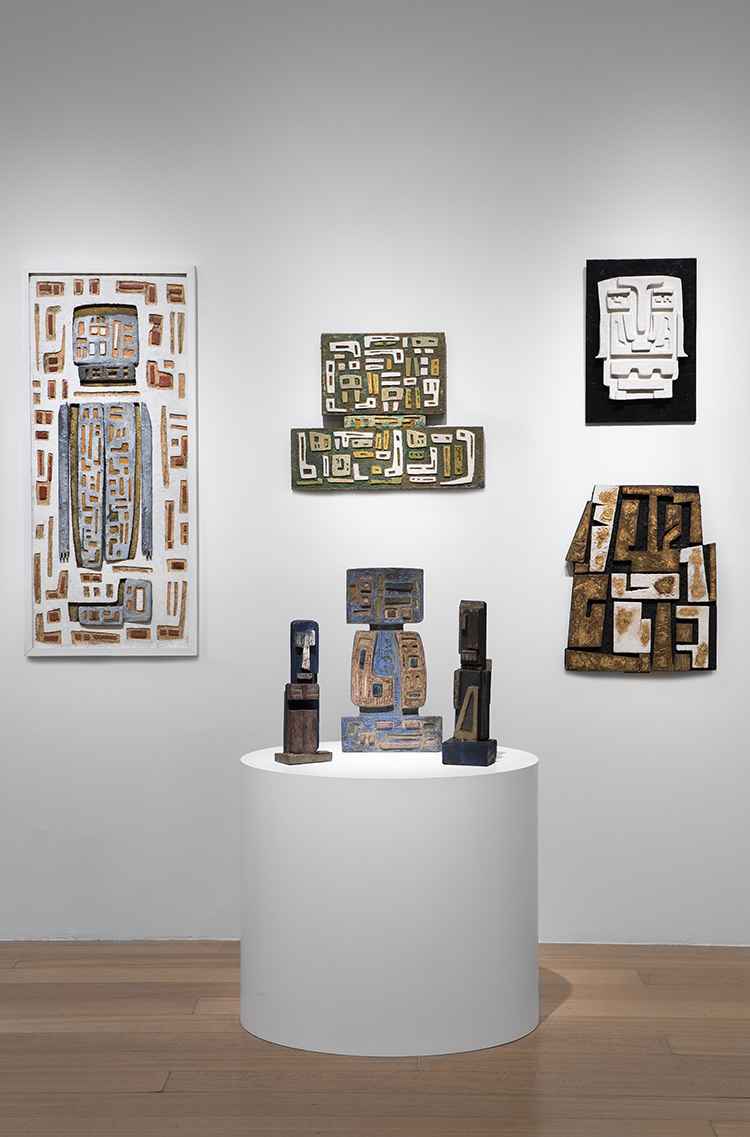
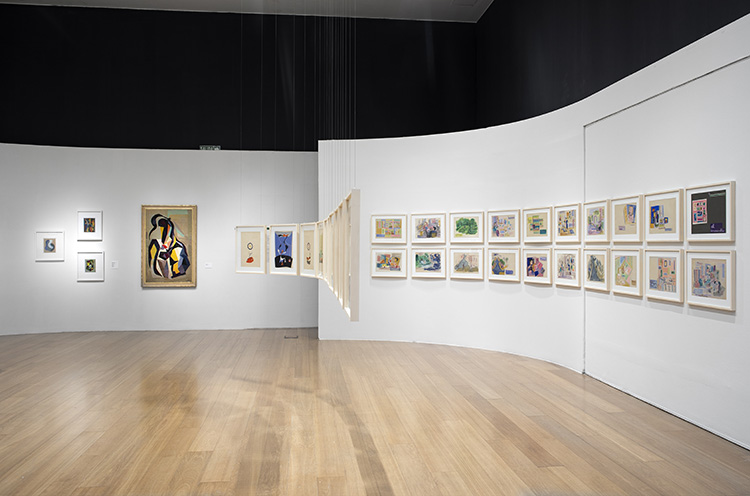
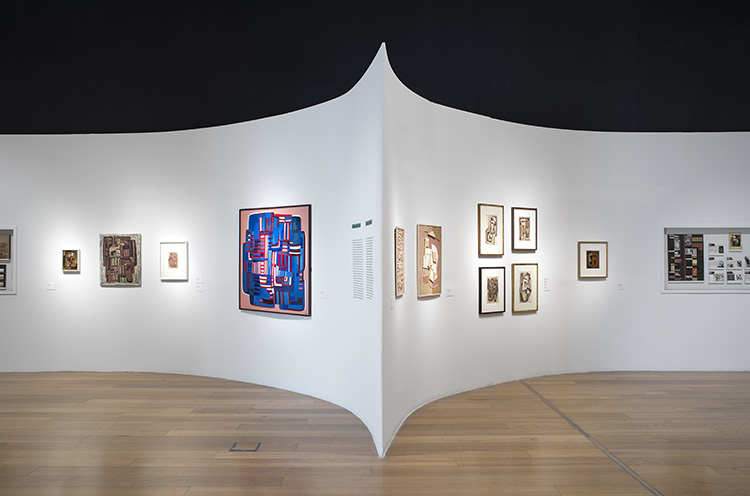
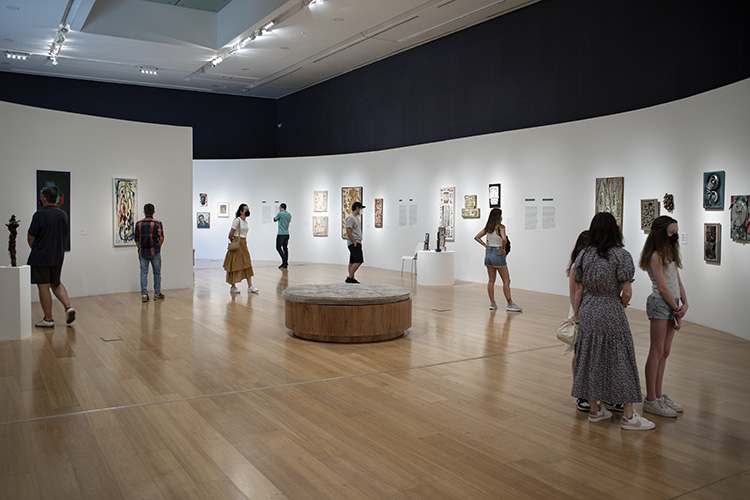
Though their approaches were different, the dialogue between them was intimate and unabating. This exhibition—the first to bring together over one hundred and fifty works produced by the artists from 1930 to 1990—focuses on their affective and creative bond.
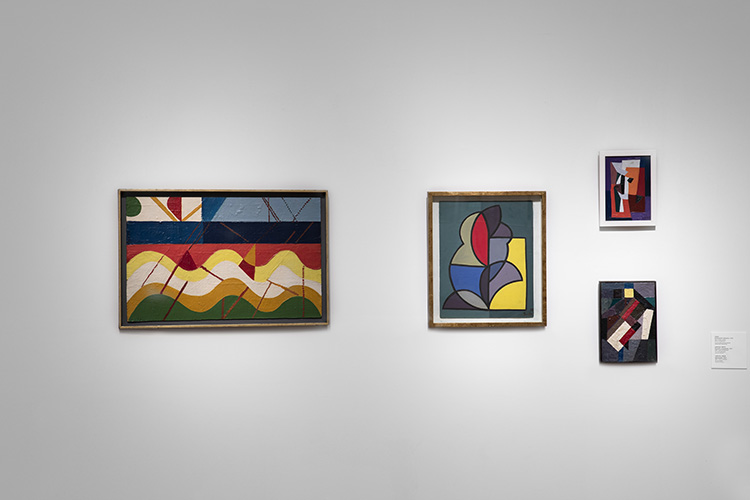
In the words of curator Marita García: "The transition between figuration and abstraction was a constant in the couple, encompassing various styles (among others, cubism, surrealism, abstraction, expressionism) and experimentation, both with the materials of art (various supports, inks, oils worked with a brush and spatula; pronounced fillings and drippings) as well as with a wide range of elements typical of DIY and discarded materials. Yente and Del Prete, in their irrepressible passion for doing, appropriated the canon of modern art through various references, currents and representations".
Blessed Life celebrates the meeting and concurrence of Yente and Del Prete, and how they navigated both daily life and art making together. The exhibition eschews an individualistic idea of creativity, understood as a solitary and heroic struggle for expression, to emphasize instead how important everyday affective ties are to art’s processes and scenes.
Curadora: María Amalia García.
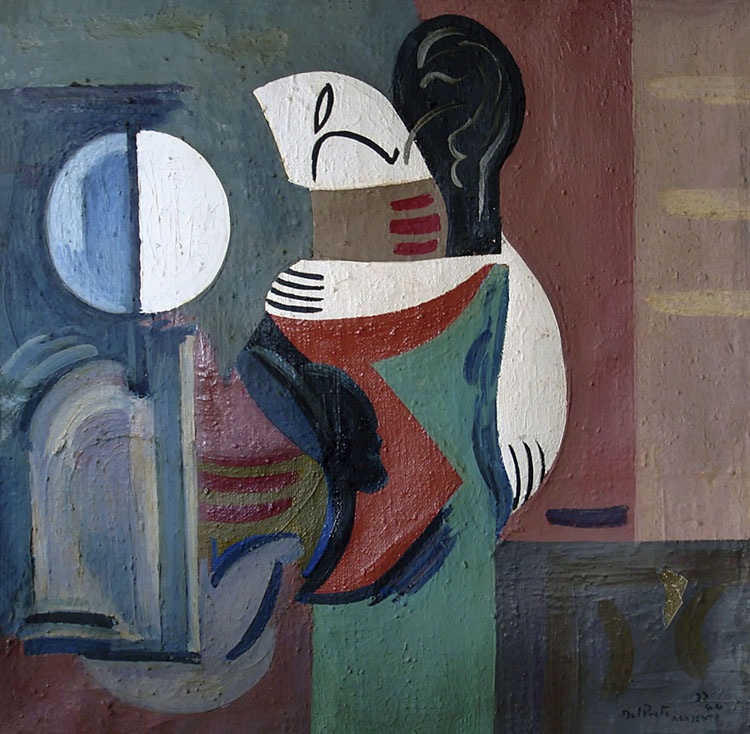
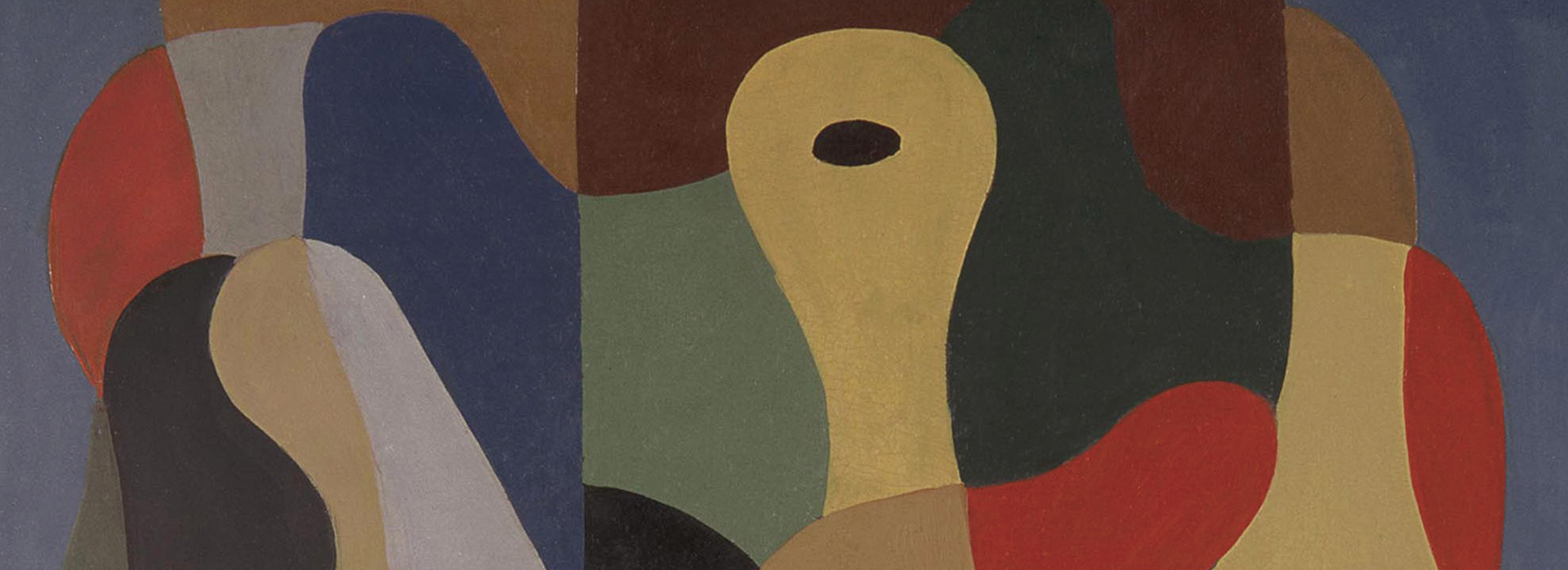
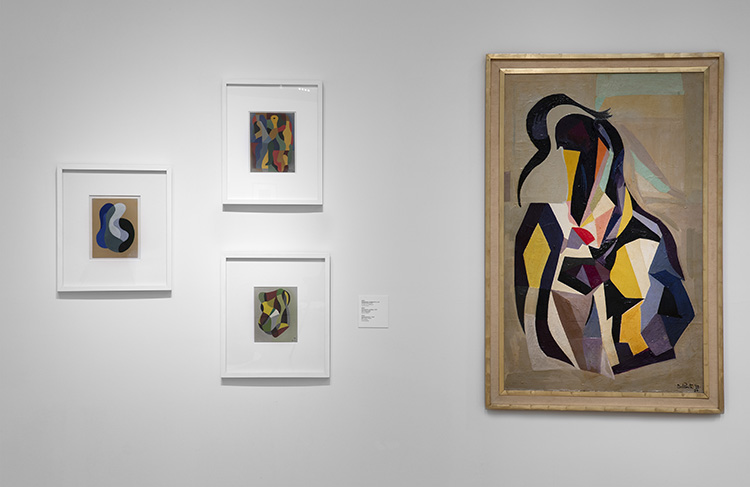
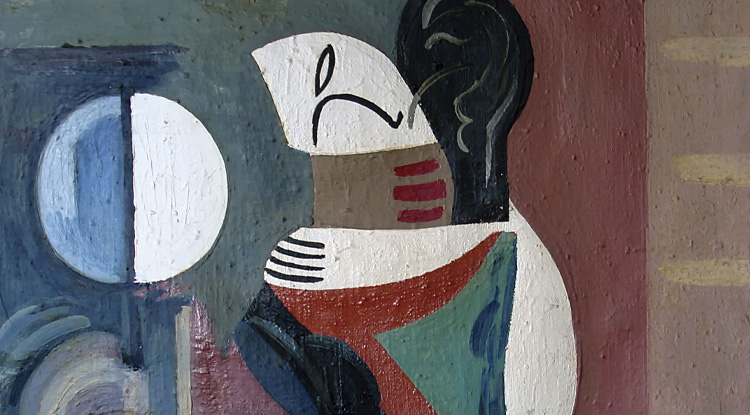
Imágenes: Yente. Composición curvilínea, 1938 / Juan Del Prete. El abrazo,1937-1944.
Guided Tours
Mondays, Wednesdays, Fridays, and Saturdays at 5:00 p.m.
Included with museum admission ticket.
No prior registration is required.
Meeting point: entrance to the gallery, level 2.
Audioguides
Learn more about the world of Yente and Del Prete through this audio series.

Catalogue
As part of the exhibition, Malba is presenting a 224-page book that includes all the works on display along with a selection of texts in Spanish and English. In addition to the curatorial essay by María Amalia García, the publication brings together three works by researchers Gabriel Pérez Barreiro, Ayelén Pagnanelli, and Verónica Rossi, which address various aspects of the life and work of the artist couple.
La batuta mágica
In addition to the catalog, Malba published a special facsimile edition of the artist's book La batuta mágica, published by Yente in 1949. There are 300 serialized copies, 200 of which are signed by the Yente Del Prete Archive. “Yente's artist's books are a remarkable collection: they show her versatility as a publisher and illustrator and her inventiveness in the articulation of text and image,” says María Amalia García.
In the Press
Crear juntos, una obra de pares
By Laura Casanovas
Clarin.com – Ñ. 10/03/2022
El hilo marrón: un destino que unió durante medio siglo a dos artistas pioneros
By Celina Chatruc
La Nacion 07/03/2022
Yente y Juan del Prete, el amor y el arte entrelazados en la muestra «Vida venturosa»
By Marina Sepúlveda
Télam. 10/03/2022
Abstractos pioneros voraces
By Marina Oybin
Página 12. Radar. 10/04/2022
Yente y Del Prete: una historia de pioneros, amor y arte más allá del tiempo
By Juan Batalla
Infobae.com. 16/03/2022
Valioso tributo a pareja pionera en la abstracción
By Ana Martínez Quijano
Ambito. 16/03/2022
Yente
Buenos Aires, 1905 – 1990
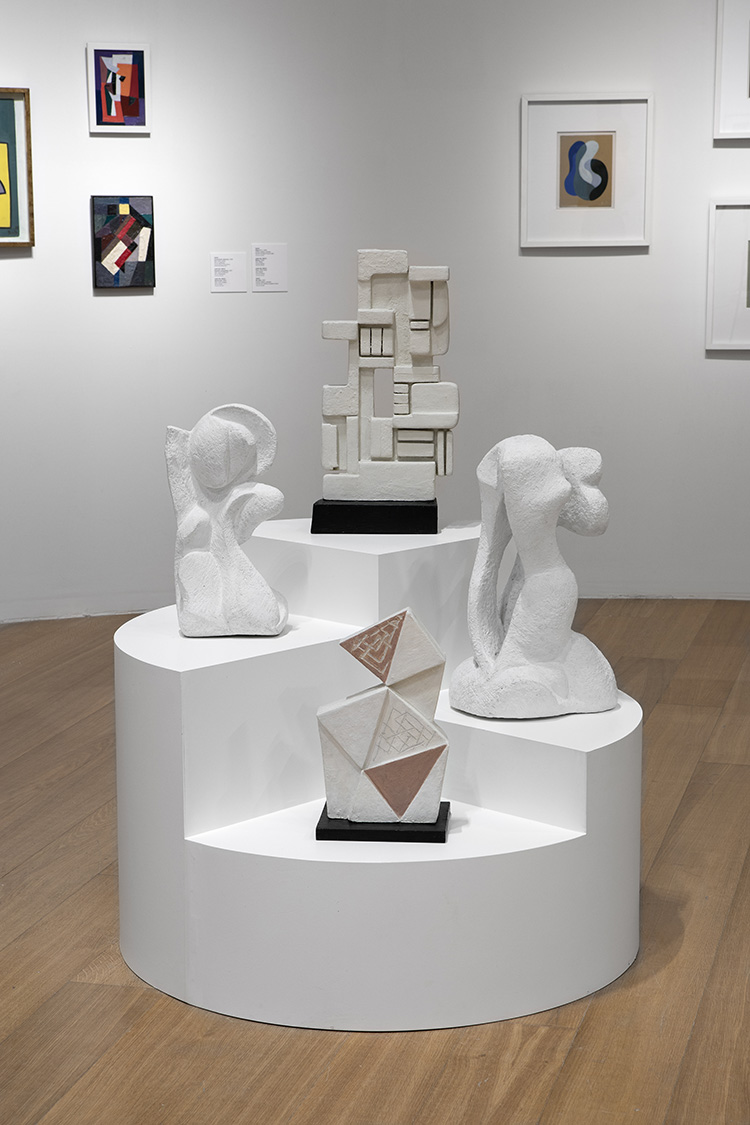
Painter, sculptor, and illustrator. She studied philosophy at the University of Buenos Aires. She attended Vicente Puig's workshop in Buenos Aires and, beginning in 1932, the School of Fine Arts at the University of Santiago, Chile, where she took classes in painting and composition. In 1935, she held her first solo exhibition at Amigos del Arte, where she presented figurative drawings; that same year, she began a relationship with Juan Del Prete. From 1937 onwards—without neglecting the figurative style she cultivated throughout her life—she participated in the beginnings of abstraction in Argentina, becoming the first female artist in our country to practice it. In 1945, she began a series of reliefs and constructive objects in Celotex, a soft material that allowed her to carve without difficulty. From 1956 to 1959, she made abstract tapestries with wool and colored threads combined with paint; and, at the same time, starting in 1957, she turned to what she called “abstract impressionism,” a non-figurative painting of free form, executed with short, impasto brushstrokes that make the surface of the painting vibrate. Throughout his career, he produced more than twenty illustrated books, all unpublished, based on pre-existing or his own narratives, some of which were autobiographical.
Juan Del Prete
Vasto, Italy, 1897 – Buenos Aires, 1987
During his childhood, he emigrated with his family from Italy and settled in the La Boca neighborhood of Buenos Aires. Self-taught, in 1925 he submitted his first work to the National Salon, which had a great impact, and the following year he presented his first solo exhibition at the Friends of Art Association. In 1929, he obtained a scholarship to travel to Paris, where he came into contact with the work of the great classical masters and the pioneers of the avant-garde. At the same time, he became acquainted with Joaquín Torres-García, Hans Arp, and Enrico Prampolini, among other members of the avant-garde circles. In 1933, he returned to Buenos Aires, where he presented abstract paintings and collages at Amigos del Arte. This exhibition, considered the first show of non-figurative art in the country, was followed by another in which he exhibited abstract sculptures made of wire, iron plates, and carved plaster. In 1935, he began a relationship with Yente. During the 1940s, he produced both figurative works with saturated colors and a strong material presence, as well as abstract works. In 1954, he returned to Europe and exhibited in Paris, Genoa, Milan, and Como (Italy). During those years, he also presided over the Association of Non-Figurative Artists. Various institutions presented retrospective exhibitions of his career: the National Secretariat of Culture, Buenos Aires (1950); the Museum of Modern Art, Buenos Aires (1961); the Museums of Contemporary Art in Santiago, Chile, and Lima (1963); and the Lorenzutti Foundation (1974).