Exhibitions → 2026

Abel Rodríguez / Mogaje Guihu
The Tree of Life and Abundance

June 19 – August 23

Floor 1

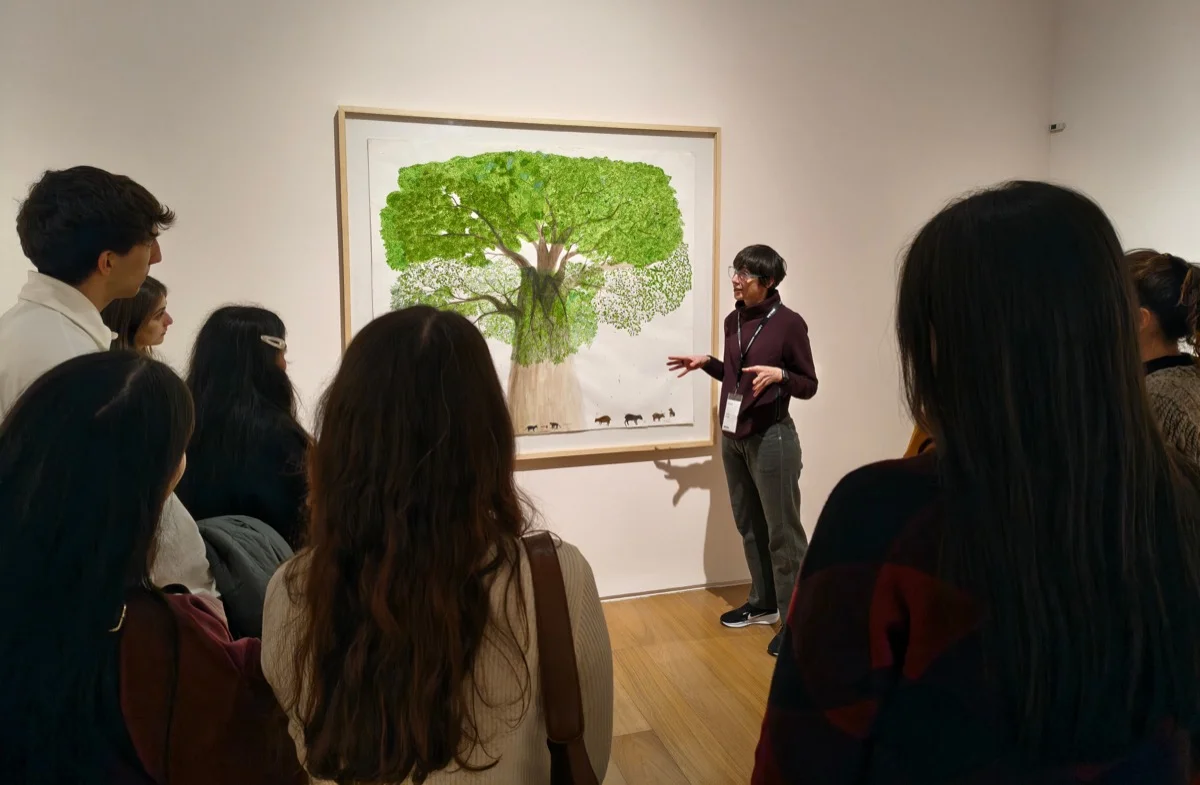
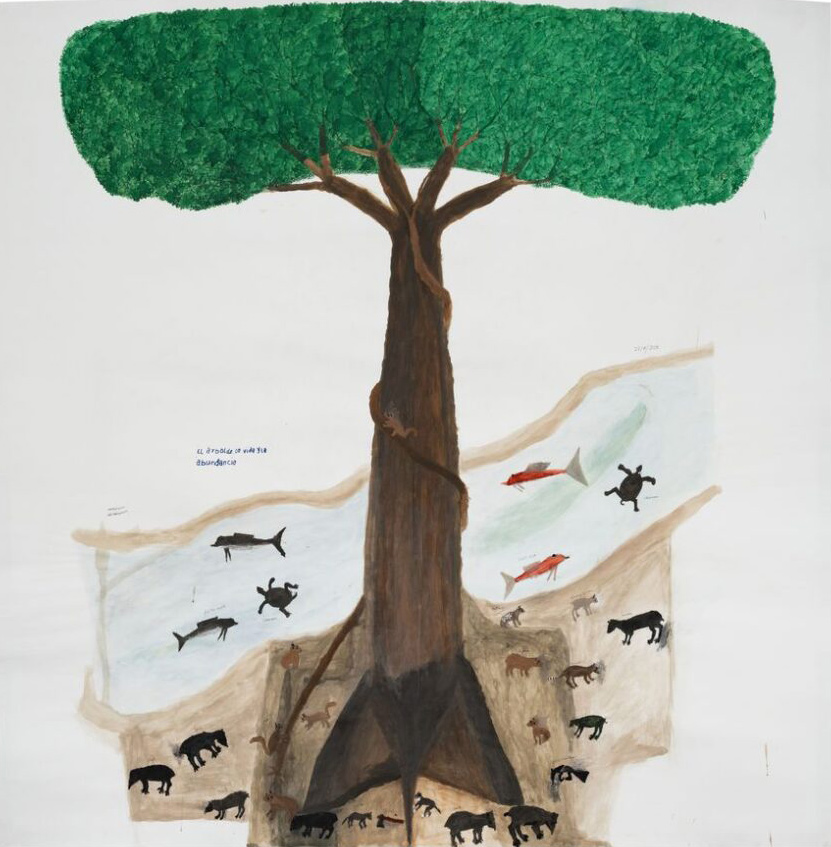
This exhibition brings together a broad selection of works by Abel Rodríguez / Mogaje Guihu (Colombia, 1941–2025), one of the most significant figures in contemporary Latin American art and among the first Indigenous artists to enter the international art circuit. Its title refers to the Tree of Abundance, an image found in the cosmologies of numerous Indigenous peoples: the primordial tree from which all fruits emerged and which, once felled by an axe, scattered its seeds across the world.

Curator

Adriano Pedrosa, Director artístico, MASP; y Leandro Muniz, Curador asistente, MASP

Guided Tours

Viernes a las 17:00, a partir del 22 de junio

Descubrí más

Access exclusive activities and discounts


Event Details

This event is running from 19 June 2026 until 23 August 2026. It is next occurring on 27.07.2026 12:00 pm


Born on the banks of the Cahuinarí River in the Colombian Amazon, Rodríguez—whose Indigenous name, Mogaje Guihu, means “shining hawk feather”—was one of the last members of the Nonuya people, whose population was devastated during the “rubber holocaust” that took place in the region between the late nineteenth and early twentieth centuries. Raised by his mother’s family, he was trained from childhood as a sabedor: a knowledge keeper capable of identifying and naming every plant in the rainforest, understanding its practical and symbolic uses, as well as the web of relationships connecting plants, animals, people, and territory. 

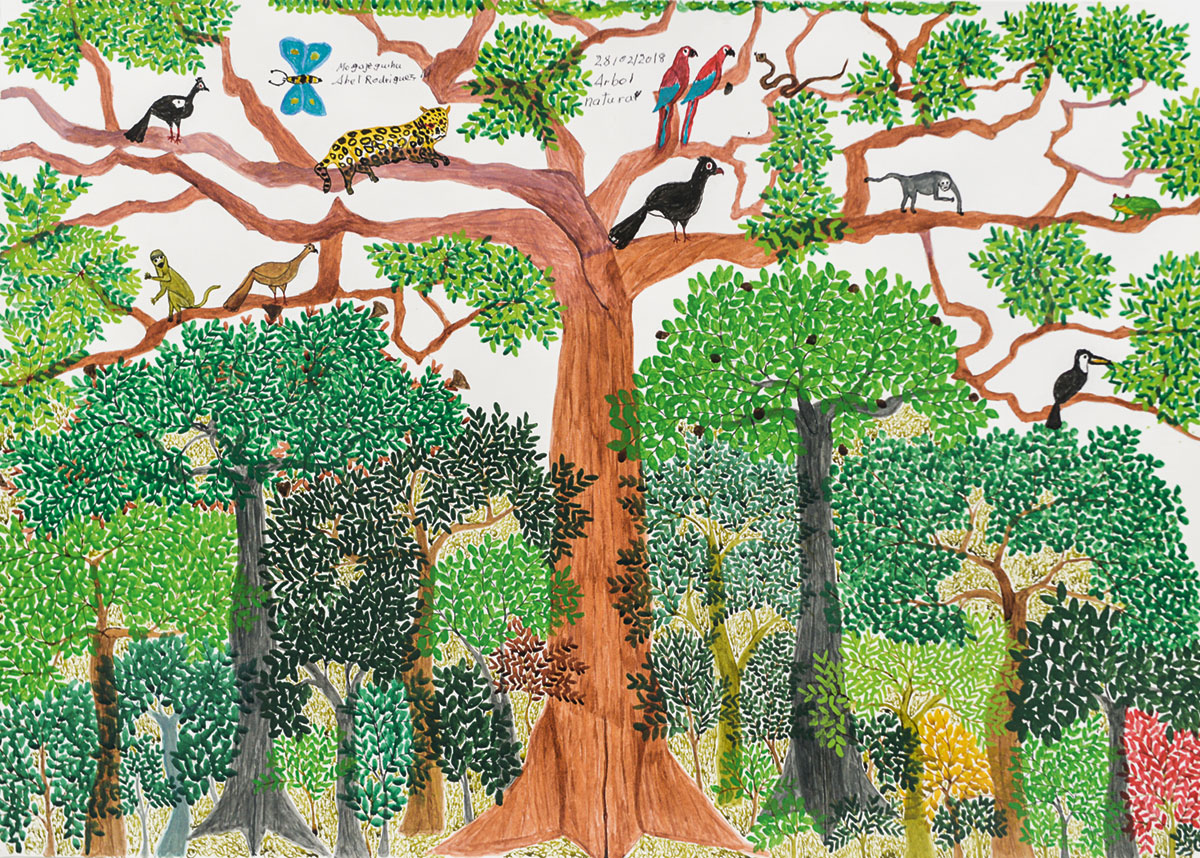
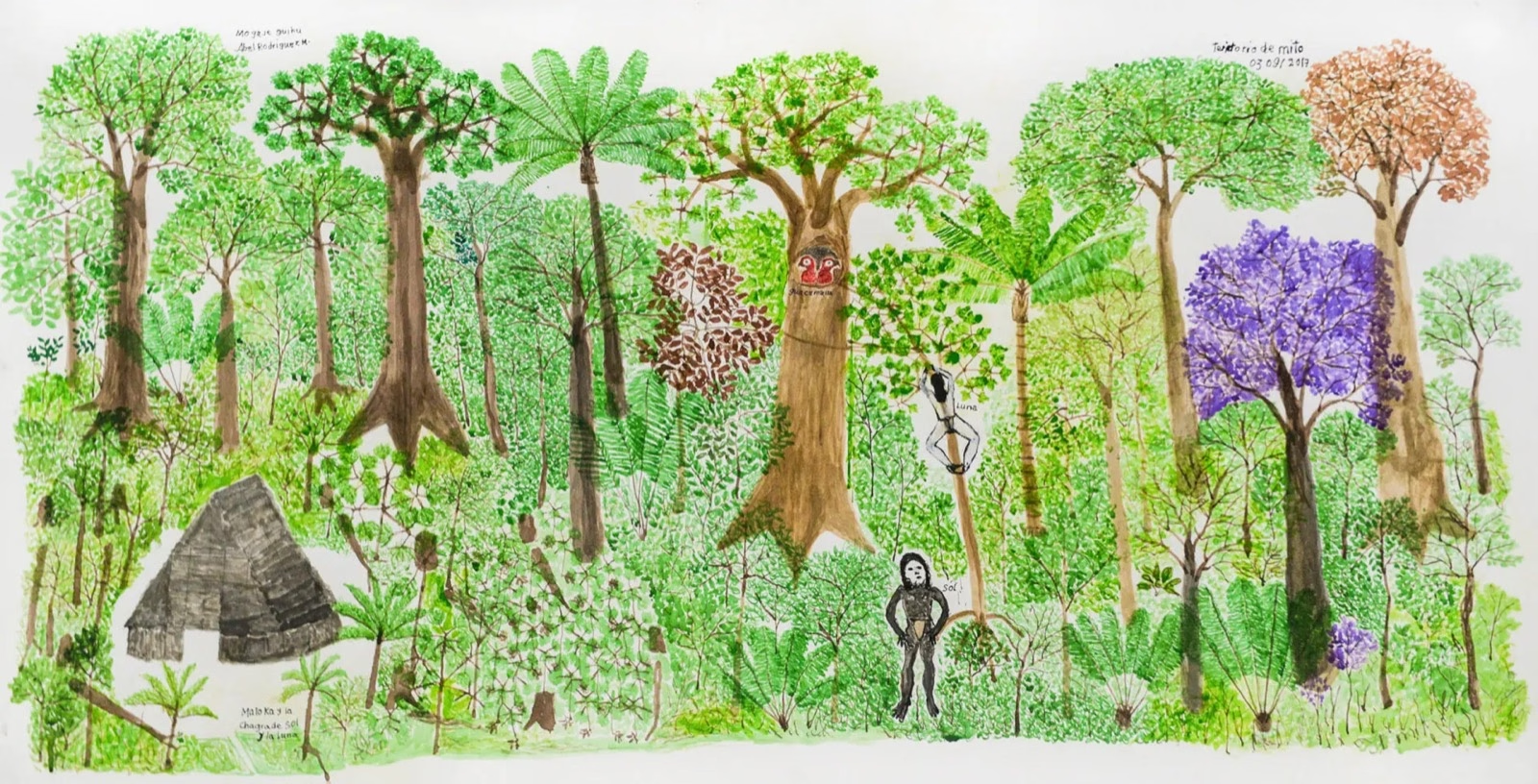
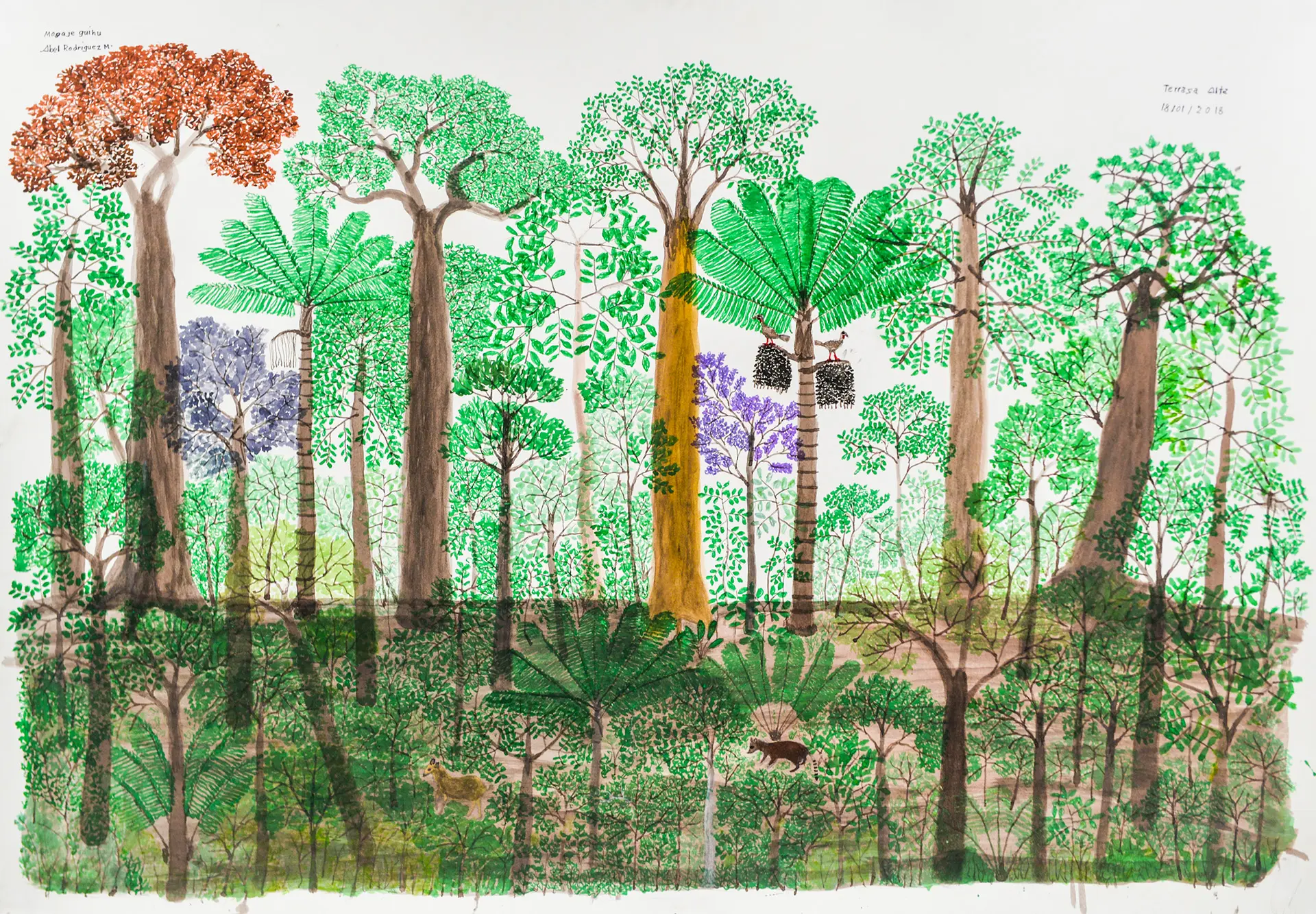
Rodríguez began drawing around the age of forty, translating into images forms of knowledge embedded in Indigenous languages that could not be rendered into Spanish. Over the course of three decades, he produced nearly five hundred works—in watercolor, gouache, ink, and acrylic—that reconstruct the Amazon rainforest from memory, tree by tree and leaf by leaf. In these drawings, the density of the forest never becomes an undifferentiated mass. Instead, it unfolds into a range of greens discernible only to an eye trained in the rainforest. Each work is signed with both of his names, Mogaje Guihu and Abel Rodríguez, marking a boundary between two worlds while also suggesting the possibility of their harmonious coexistence.


Organized by the Museu de Arte de São Paulo Assis Chateaubriand.


Top image: Terraza, 2018. Private collection. Terraza, 2018. Colección particular. 

Abel Rodríguez (Mogage Guihu)

Colombia, 1941-2025

Abel Rodríguez was born around 1941 at the headwaters of the Cahuinarí River in the Colombian Amazon. He belonged to the Hawk Clan, a subgroup of the Nonuya people. His training as a sabedor, which began at the age of eight, was interrupted when he entered a Catholic boarding school where he learned Spanish. As an adult, he established a farm near Araracuara and helped found the Nonuya Indigenous Reserve of Villazul and the Peña Roja community. During the 1990s, the advance of armed conflict, drug trafficking, and extractive industries in the region forced him to migrate to Bogotá, where he lived for the remainder of his life. He began drawing around the age of forty. Over three decades, he produced nearly five hundred works in watercolor, gouache, ink, and acrylic, reconstructing Amazonian ecosystems and their cycles from memory. In the process, he documented approximately four hundred botanical species. His son Aycoobo (Wilson Rodríguez), also an artist, frequently exhibited alongside him. In 2014, he received the Prince Claus Award, a turning point that opened the doors to the international contemporary art scene. Thereafter, he participated in documenta 14, Kassel (2017); the Carnegie International, Pittsburgh (2018); the Milan Triennale (2019); the Bienal de São Paulo (2021); the Toronto Biennial of Art and the Biennale of Sydney (2022); the Gwangju Biennale (2023); and the Venice Biennale (2024). He passed away in Bogotá on April 9, 2025.


Catalogue

Access exclusive activities and discounts

Curator

Adriano Pedrosa, Director artístico, MASP; y Leandro Muniz, Curador asistente, MASP

Guided Tours

Viernes a las 17:00, a partir del 22 de junio