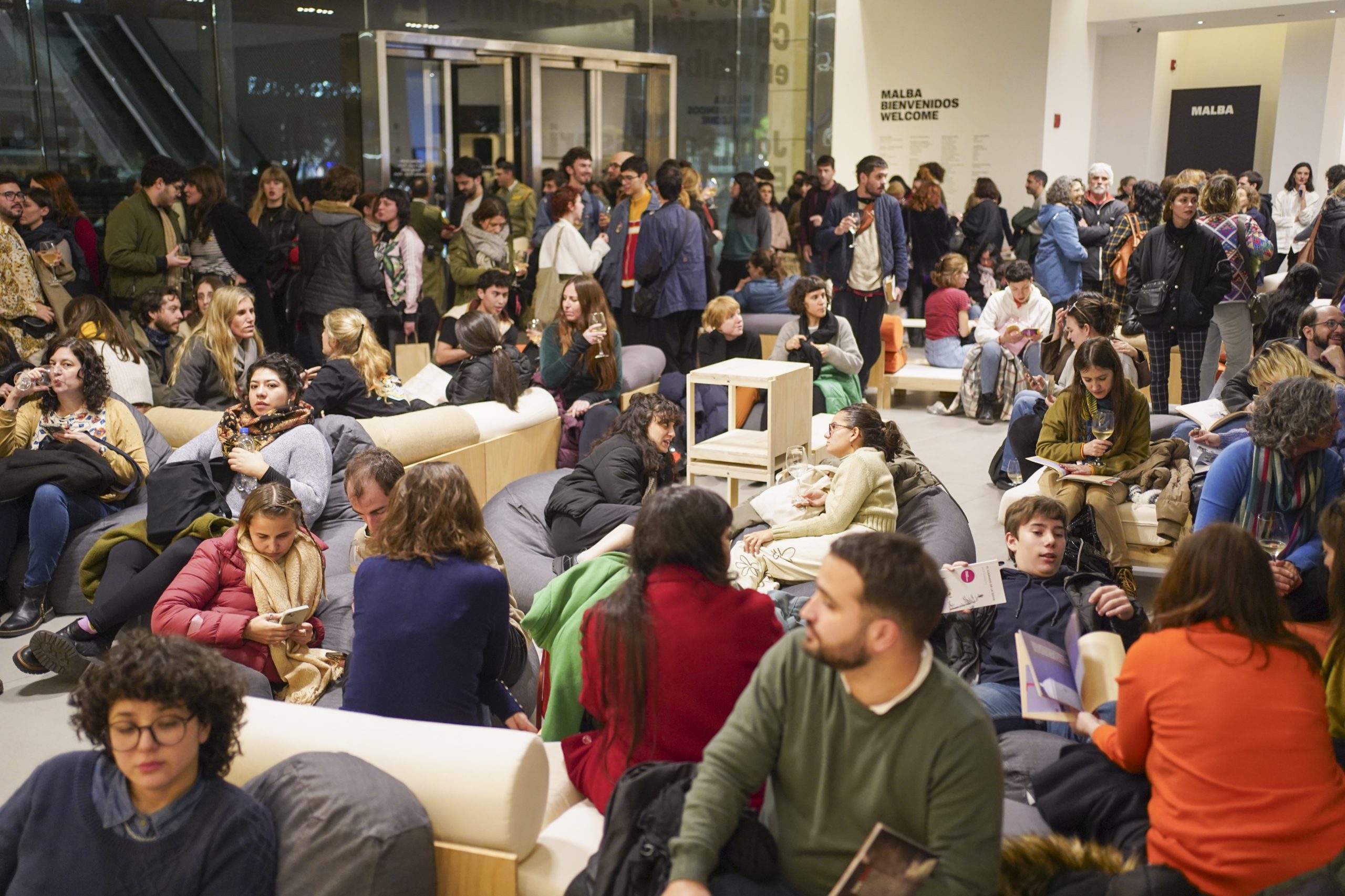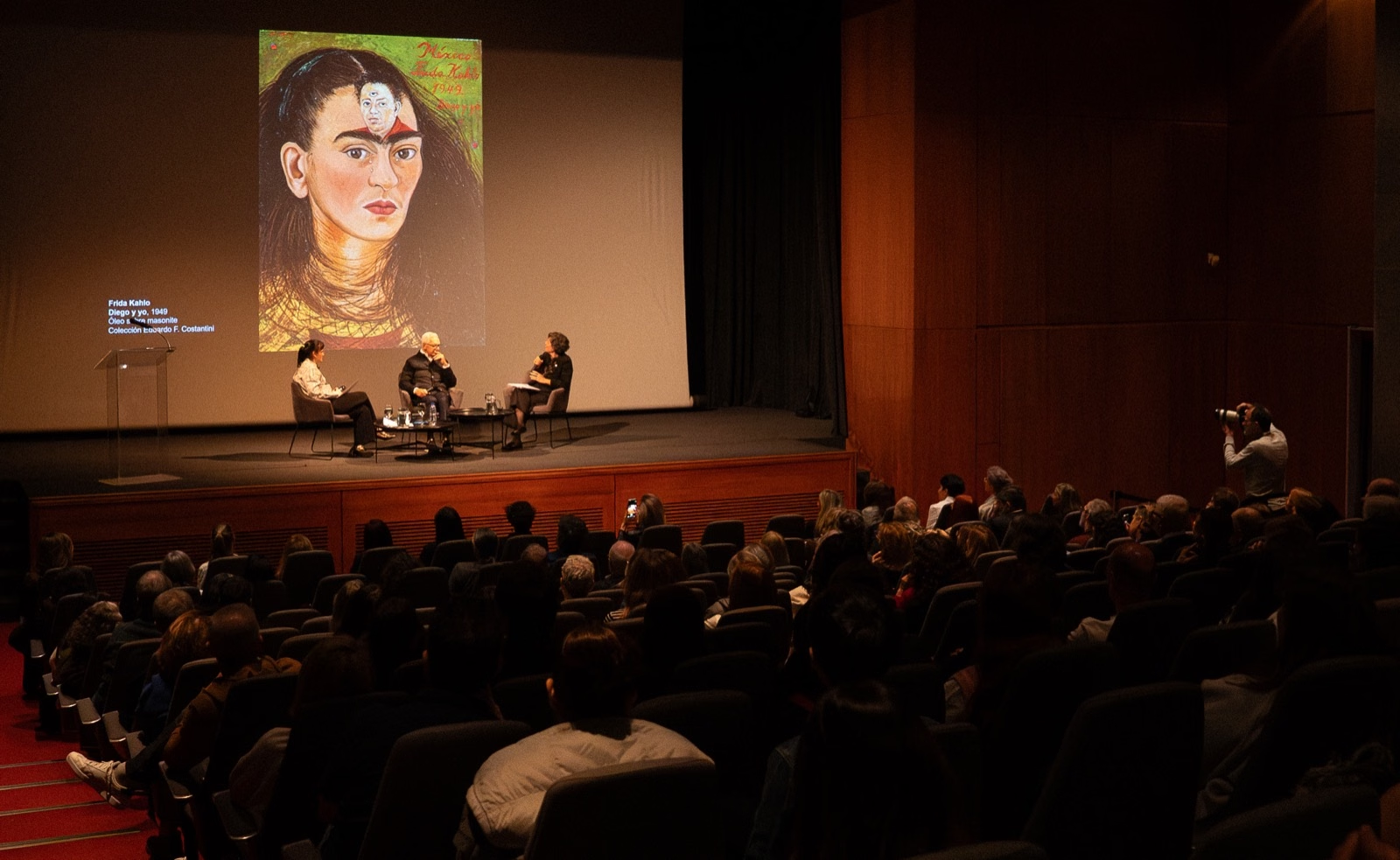
The program offers a range of perspectives on Latin American art and its international circulation. The conversations trace the connections between the construction of identity, collecting and the role of cultural institutions. With the museum’s holdings growing and a new stage of expansion underway, the seminar also sets out to revisit some of the processes that accompanied the presence of Latin American art on the international stage over the past 25 years.
The seminar is part of the international programming that Malba is presenting for its anniversary week, September 18 to 21.
Admission to the seminar is free with prior registration.
Tickets available on this page from Monday, September 7.
The seminar will offer simultaneous interpretation from English into Spanish and from Spanish into English, through individual devices available in limited numbers.
Organized with the support of

Simultaneous interpretation by ICANA.
Schedule
10:00
Check-in and distribution of simultaneous interpretation devices
10:30–10:40 am
Opening remarks by Teresa Bulgheroni, vice president of Malba
10:45 am–noon
Panel 1 — Contemporary art: ancestral paths and futures in the making
With Beatriz Milhazes and Tomás Saraceno
Moderator: María Amalia García
12:15–1:30 pm
Panel 2 — Viva Frida
With Circe Henestrosa, Gannit Ankori, Perla Labarthe and Jessica Serrano
Introduction by Elina Costantini
1:30–3:30 pm
Break
3:30–4 pm
Panel 3 — The art of looking
Patrizia Sandretto Re Rebaudengo in conversation with Carmen Reviriego
4–4:30 pm
Panel 4 — A year of cultural diplomacy: Qatar and Argentina
Her Excellency Sheikha Al Mayassa bint Hamad bin Khalifa Al Thani in conversation with Glenn Lowry
4:30–5 pm
Break
5–5:30 pm
Panel 5 — Patricia Phelps de Cisneros: a collecting career and strategy Phelps de Cisneros
Patricia Phelps de Cisneros interviewed by Eduardo F. Costantini
Full program
Panel 1
Contemporary art: ancestral paths and futures in the making
With Beatriz Milhazes and Tomás Saraceno
Moderator: María Amalia García
Beatriz Milhazes and Tomás Saraceno develop practices shaped by different territories, memories and forms of knowledge. Milhazes works with abstraction and Brazilian popular imagery; Saraceno with the relationship between art, science, ecology and ancestral knowledge. Their work shows different ways of relating to territory and to inherited knowledge.
The conversation focuses on these relationships and on the ways in which practices linked to specific contexts circulate through different institutions and audiences. It also addresses the place that Latin American artists, and the worldviews running through their work, occupy on the international scene today.
Panel 2
Viva Frida
With Circe Henestrosa, Gannit Ankori, Perla Labarthe and Jessica Serrano
Opening remarks by Elina Costantini
Viva Frida comes to South America for the first time as part of Malba’s 25th anniversary. Semana de la Alta Costura (SAC) presents the exhibition, organized together with the Museo Frida Kahlo in Mexico, under the direction of Elina Costantini.
Curated by Circe Henestrosa, the exhibition brings together more than 350 pieces—personal belongings, paintings, photographs, letters and documents of Frida Kahlo, one of the most influential artists of the twentieth century. The curatorial approach places dress and self-representation at the center of Frida’s artistic and personal practice. Her choices of clothing appear tied to the construction of her image, her relationship with Mexican culture and her bodily experience. The panel takes these materials as a starting point to explore how the exhibition was built and the figure of Frida Kahlo as an artist and a cultural figure.
The conversation will unfold in two parts: first, Circe Henestrosa with art historian Gannit Ankori; then, Perla Labarthe, of the Museo Frida Kahlo, with Jessica Serrano, director of financial education and cultural promotion at Banco de México.
Panel 3
The art of looking
Patrizia Sandretto Re Rebaudengo in conversation with Carmen Reviriego
Patrizia Sandretto Re Rebaudengo, collector and founder of the Fondazione Sandretto Re Rebaudengo, and Carmen Reviriego, art historian and president of Fundación Callia, discuss the collector’s eye: how talent is discovered, what leads someone to commit to particular artists, and how collecting becomes a form of engagement with artistic creation. The conversation reflects on the role of collectors and patrons in advancing artists’ careers, generating new trends and shaping the market and museums, and on how they help to write the history of contemporary art.
Panel 4
A year of cultural diplomacy: Qatar and Argentina
Her Excellency Sheikha Al Mayassa bint Hamad bin Khalifa Al Thani in conversation with Glenn Lowry
Her Excellency Sheikha Al Mayassa bint Hamad bin Khalifa Al Thani, chairperson of Qatar Museums, will speak with Glenn Lowry, art historian and director of the Museum of Modern Art (MoMA) in New York from 1995 to 2025.
The conversation addresses the work of major cultural institutions and their role in developing projects of international scope. Her Excellency Sheikha Al Mayassa’s experience leading Qatar Museums and Glenn Lowry’s tenure at MoMA make it possible to bring into dialogue different approaches to management, programming and cultural development.
The discussion turns to the relationships between museums, collections, exhibitions and audiences, and to the ways in which institutions take part in building new cultural circuits. It also offers a perspective on the development of cultural projects on a global scale and on the ties established between institutions from different contexts.
Panel 5
Patricia Phelps de Cisneros: a collecting career and strategy Phelps de Cisneros
Patricia Phelps de Cisneros interviewed by Eduardo F. Costantini
Patricia Phelps de Cisneros is interviewed by Eduardo F. Costantini about her career and strategy as a collector, and her contribution to the recognition, study and institutionalization of Latin American art.
Over more than five decades, Patricia Phelps de Cisneros has built one of the most significant collections of Latin American art internationally, ranging from geometric abstraction to the Indigenous cultures of the Amazon. Her work has helped expand the presence of Latin American art in the canon of global art history, not only through the formation of her collection but also by supporting research and creating new platforms for knowledge. Through the Colección Patricia Phelps de Cisneros, she has promoted the study and appreciation of Latin American art and has made strategic gifts to institutions such as MoMA and the Museo Reina Sofía. Her relationship with MoMA in particular is an example of a long-term strategy aimed at positioning Latin American art from within one of the most important and influential cultural institutions in the world. She also drove the creation of the Patricia Phelps de Cisneros Research Institute at MoMA, consolidating her commitment to academic research and to building new perspectives on the art of the region.
In this interview, Eduardo F. Costantini—collector, philanthropist and founder of Malba—will talk with Patricia Phelps de Cisneros about the decisions, searches and strategies that shaped her path as a collector, as well as the role that private collections can play in building knowledge, forming institutions and positioning Latin American art internationally. In particular, they will discuss the strategy of positioning Latin American art from within one of the most important cultural institutions in the world, MoMA in New York.