Event Details
This event finished on 18 October 2015
- Categories: Exhibitions
- Tags: Plantilla histórica
07.24 — 10.18.2015
Opening: Thursday, July 23 7:00 p.m.
Curators: Miguel A. López and Agustín Pérez Rubio
In the framework of the project to recognize and valorize work by historical artists from Latin America (a project to be housed in Gallery 3), MALBA will hold the first exhibition in Buenos Aires of Peruvian artist Teresa Burga (Iquitos, Peru, 1935).
An emblematic participant in the renewal of Peruvian art that took place in the sixties and seventies and a member of the Grupo Arte Nuevo (1966-1968), Teresa Burga was at the forefront of the dissolution of the art object; she made use of experimental processes and novel creative strategies to produce a decidedly conceptual body of work.
The exhibition will feature two major—and extremely current—installations from the seventies, projects directly related to the work being done at the Centro de Arte y Comunicación (CAYC) in Argentina at the time.
These installations engage conceptual questions like the dissolution of the work of art and direct experience as erosion and critical signaling of material—as well as social—supports.
The works in question are Estructuras de Aire [Structures of Art] —recently acquired by MALBA thanks to the efforts of its Acquisitions Committee— and Obra que desaparece cuando el espectador trata de acercarse (propuesta III) [Work that Disappears when the Viewer Tries to Approach It (Proposal III)].
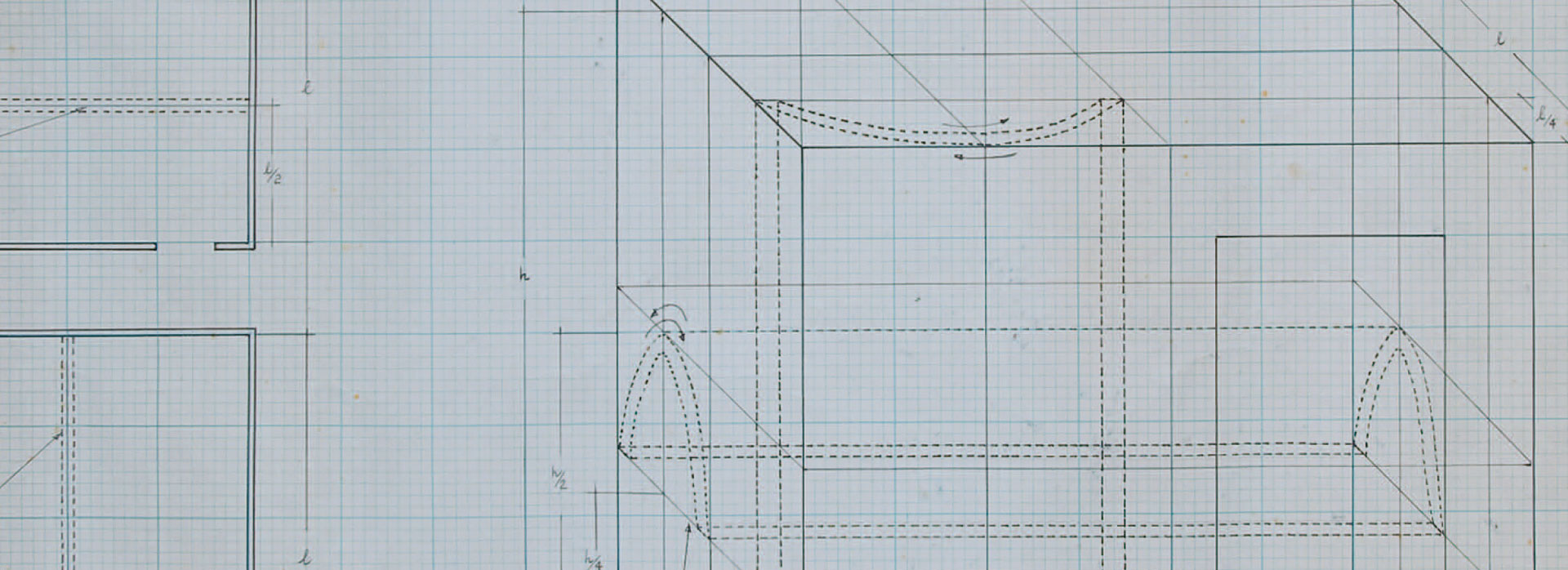
Both works attest to Burga’s interest in the immaterial and in drawing as the basis for the interpretation of her installations.
The exhibition will feature as well a selection of graphic works and drawings that serve as a conceptual basis for other series of installations and pieces envisioned for the exhibition space.
Teresa Burga
Iquitos, Perú, 1935.
She graduated from the Universidad Católica in 1964 and, in the early and mid-sixties, her work revolved around painting and printmaking. Her series of linocuts entitled Lima imaginada [Lima Imagined] (1965) consists of representations of urban settings based on images in which the specific referent is removed. Also in the mid-sixties, Burga was active in the renewal and transformation of art in Peru and the consolidation of avant-garde tendencies partly through her work with the Grupo Arte Nuevo (1966-1967). After studying at the Art Institute of Chicago for two years, the artist returned to Lima where she began producing work that makes use of experimental processes and new creative strategies such as information technology, scientific registers, and engagement of “concepts”.
Her work often takes the form of reports, descriptions, and diagrams that document past actions or formulate proposals to be carried out in the future, using statistics to reread the environment. Other times her work entails translating reality and language into different codes, quantifying and interrogating an existence—her own body, a poem, a community, or a portion of the urban space—we believe to be concrete.
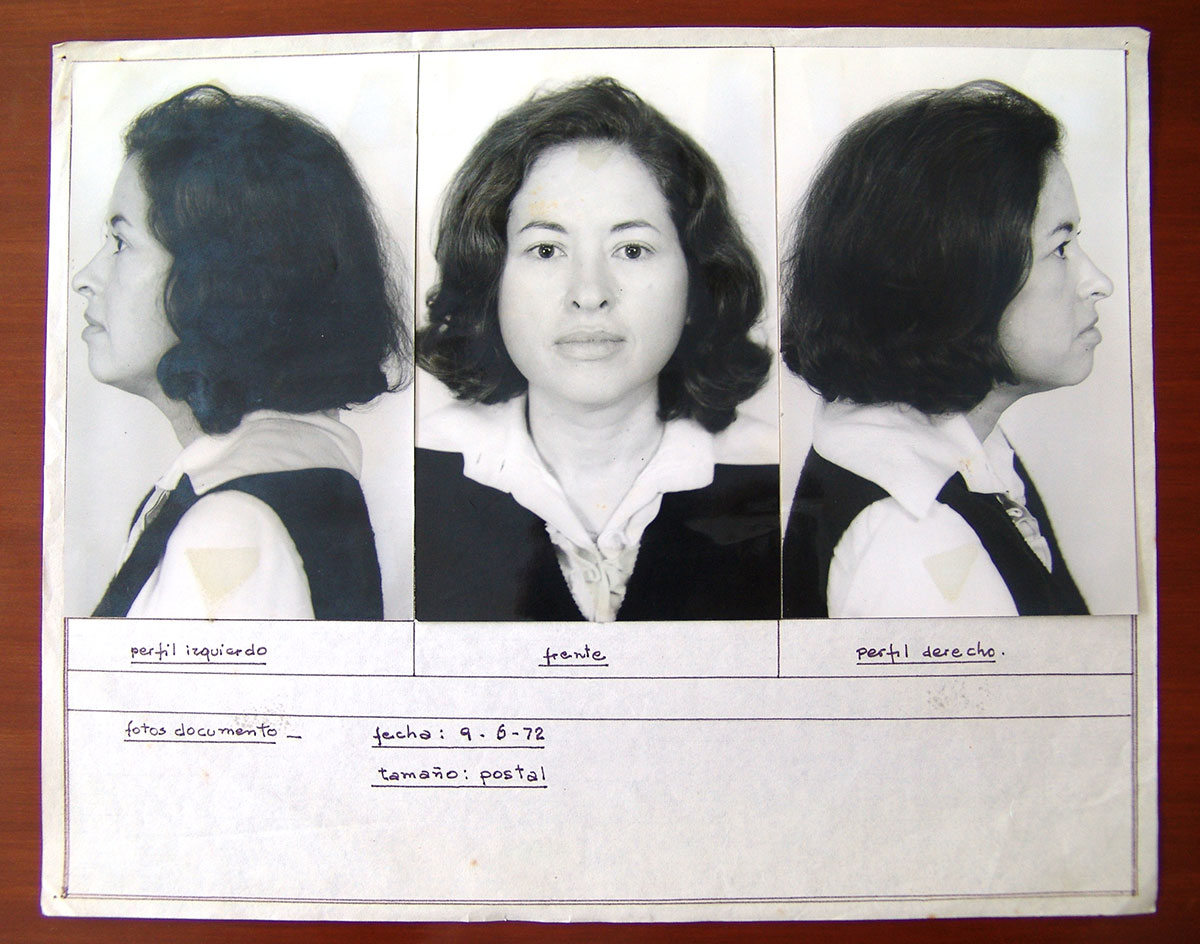
Only two exhibitions of Burga’s work were held in Lima in the seventies: Autorretrato. Estructura-Informe 9.6.72 (1972) and 4 mensajes (1974), both at the Instituto Cultural Peruana Norteamericano (ICPNA). She reappeared on the art scene there in the early eighties when, along with Marie-France Cathelat, she presented the project Perfil de la mujer peruana [Profile of the Peruvian Woman] (1980-1981). That work, which was first exhibited at the I Coloquio de Arte No-Objetual y Arte Urbano in Medellin and later in the auditorium of the Banco Continental in Lima, displays research and sociological examination of the situation of middle-class Peruvian women aged twenty-five to twenty-nine.
As early as 1967, Burga had reflected on and questioned the commonsensical identification of the domestic and the feminine. The period that separates the earlier and the later works witnessed the consolidation of a new feminist agenda in Peru.
Open work
In Air Structures —a piece acquired in 2014 by MALBA's Acquisitions Committee— geometric sculptures made of “air” are immediately destroyed when “perceived” by the viewer. Work that disappears when the viewer tries to approach it is a light sculpture that gradually fades as the visitor attempts to get closer to it.
These are two important installations from the 1970s that are directly related to the work that the CAYC (Center for Art and Communication) was doing in Argentina at the same time, in relation to conceptual issues such as the dissolution of the work and direct experience as erosion and critical commentary on its material but also social supports. Both pieces are a clear example of Burga's interest in the immaterial and in drawing as a score for interpretation in his installations.
Interviews
For the curators: "The pieces exhibited here were conceived at a time when the object-work was being questioned globally and, through its dematerialization, pointed to a profound transformation of artistic practice. Burga's rigorous work with instructions and serial works also brings her closer to the research on systems art that many Argentine artists and the critic Jorge Glusberg developed in the 1960s and 1970s."