13.06.2013 — 16.03.2014
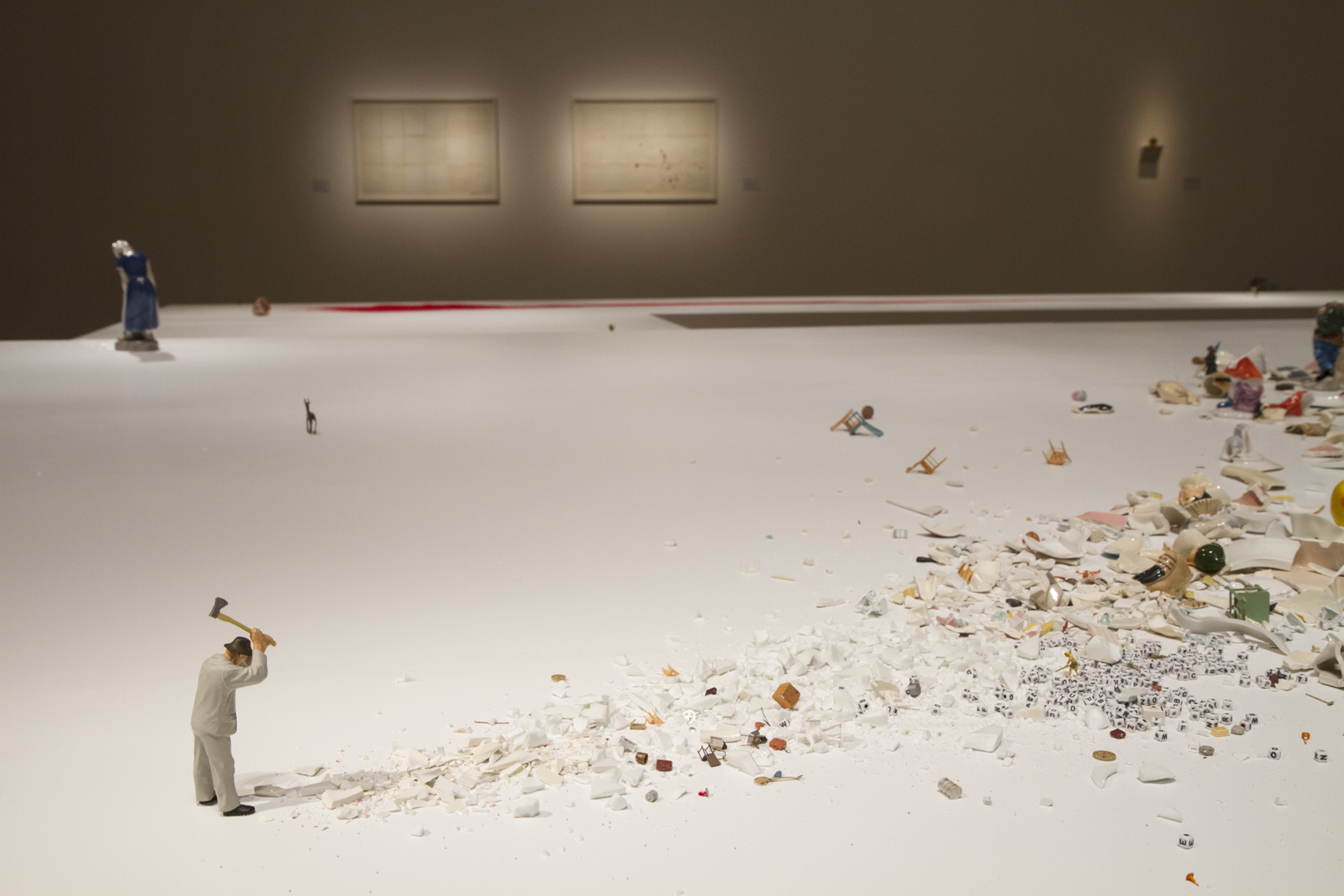
Man with the Axe and Other Brief Situations is Liliana Porter's (Buenos Aires, 1941) first solo exhibition at the museum. It is a site-specific installation created especially by the artist for Gallery 3 at Malba.
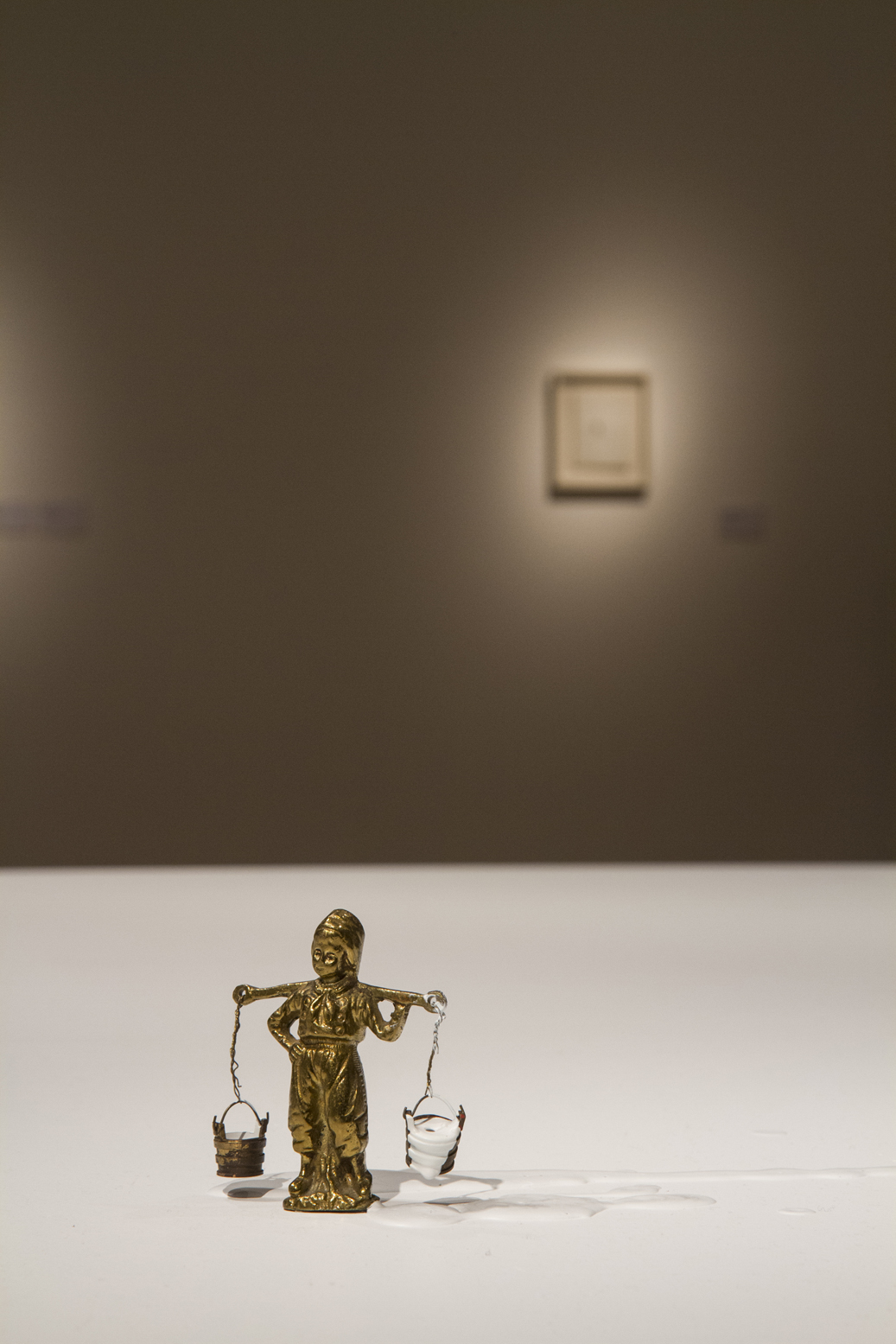
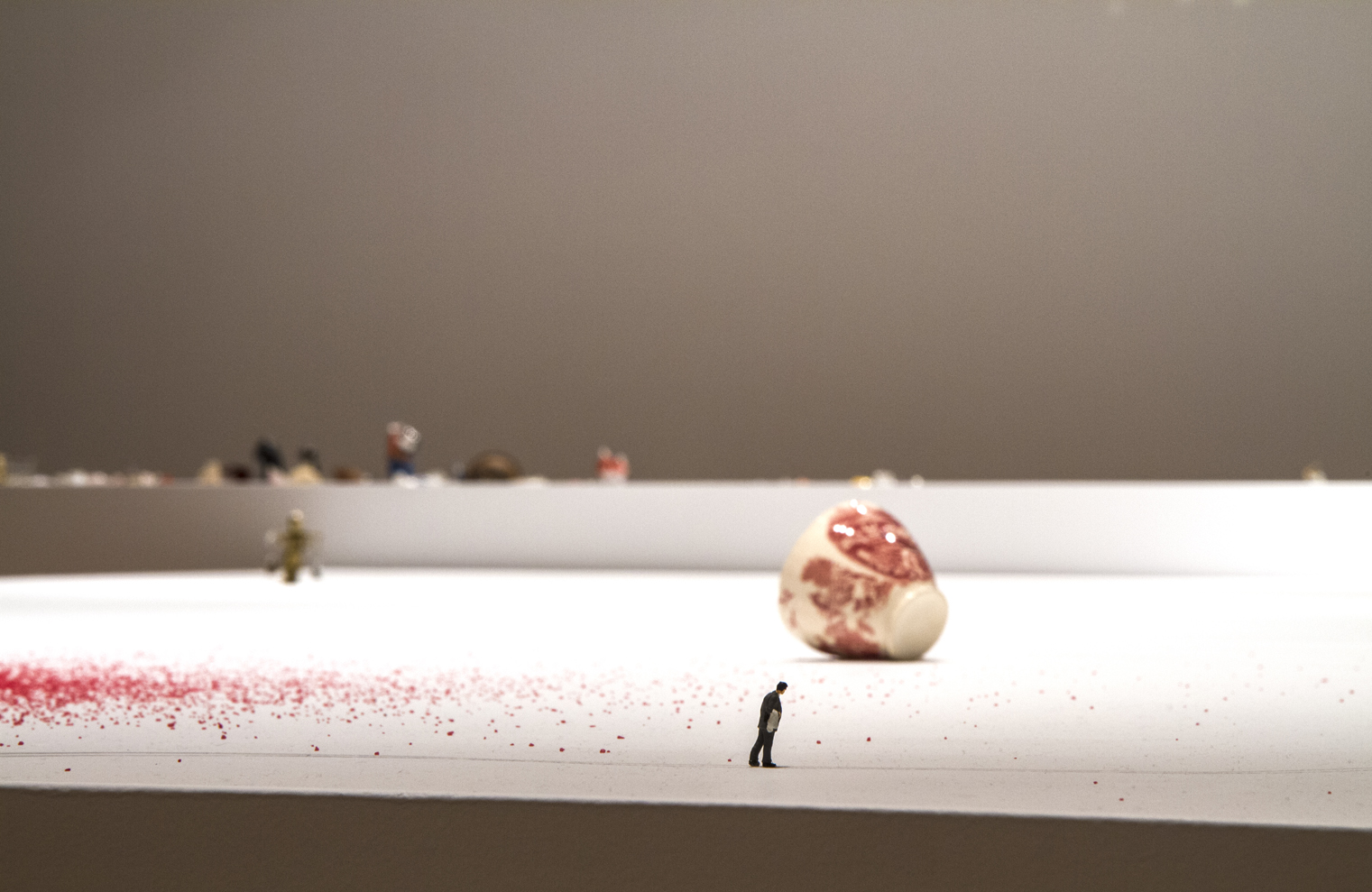
Liliana Porter's work includes engravings, drawings, installations, objects, public art projects, photography, film, and video. "The recurring themes stem from reflections on representation, the concept of time, and that ambiguous space between what we call reality and images. In recent years, almost without realizing it, a varied cast of protagonists that are ‘inanimate’ objects has entered my work: small figures, ornaments, things found in flea markets. They act within a monochrome and empty space, in a non-linear, more comprehensive time," explains the artist.
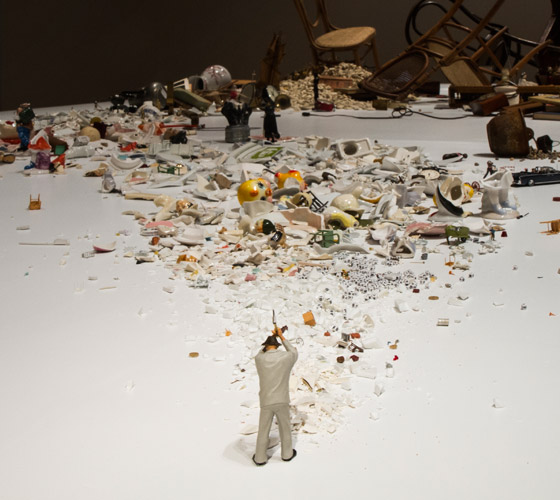
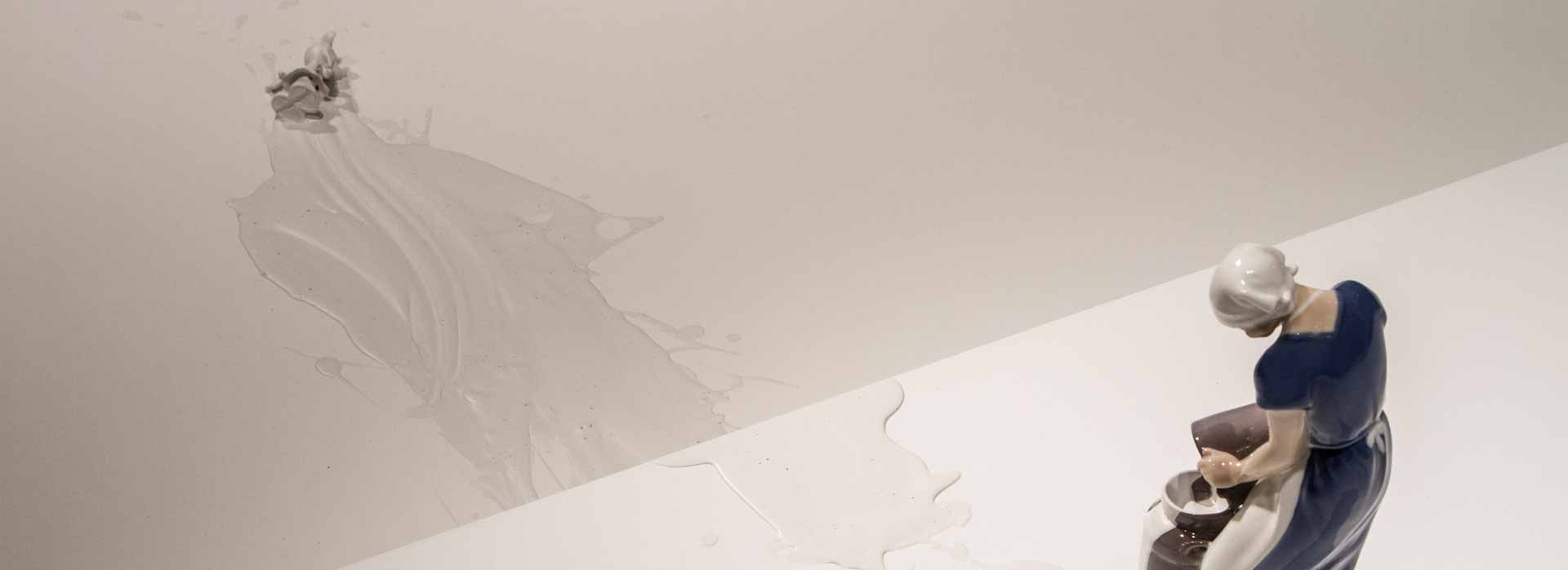
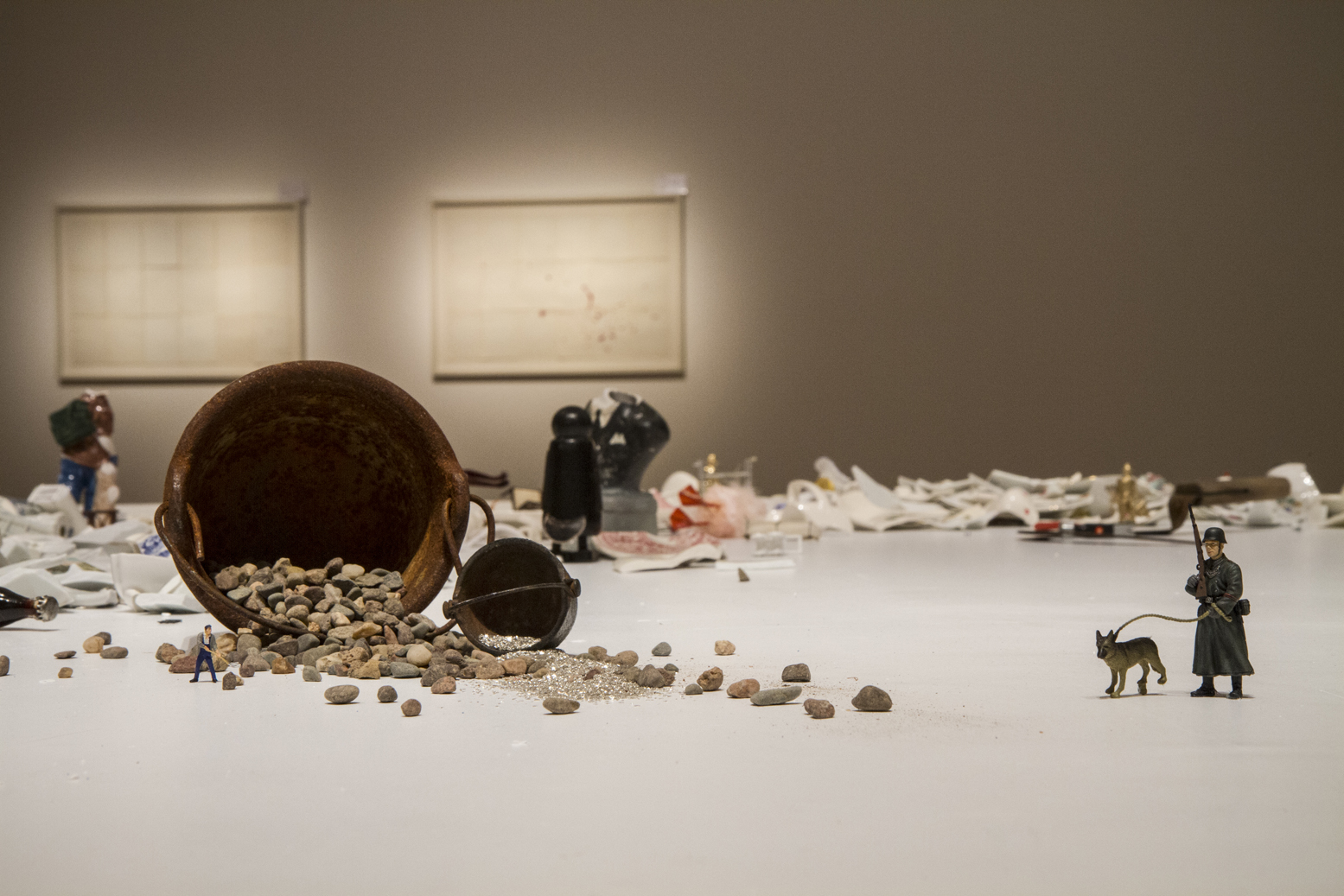
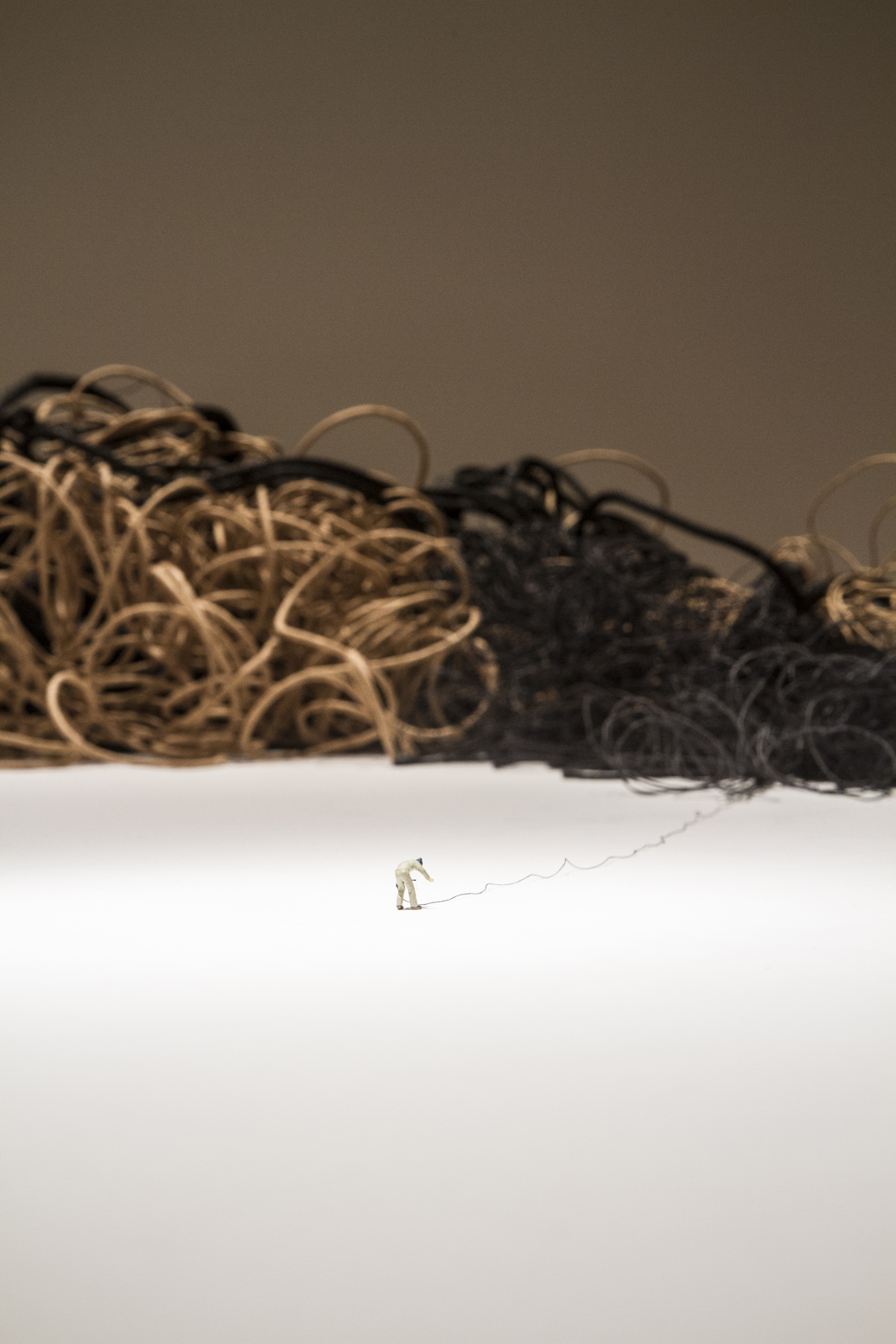
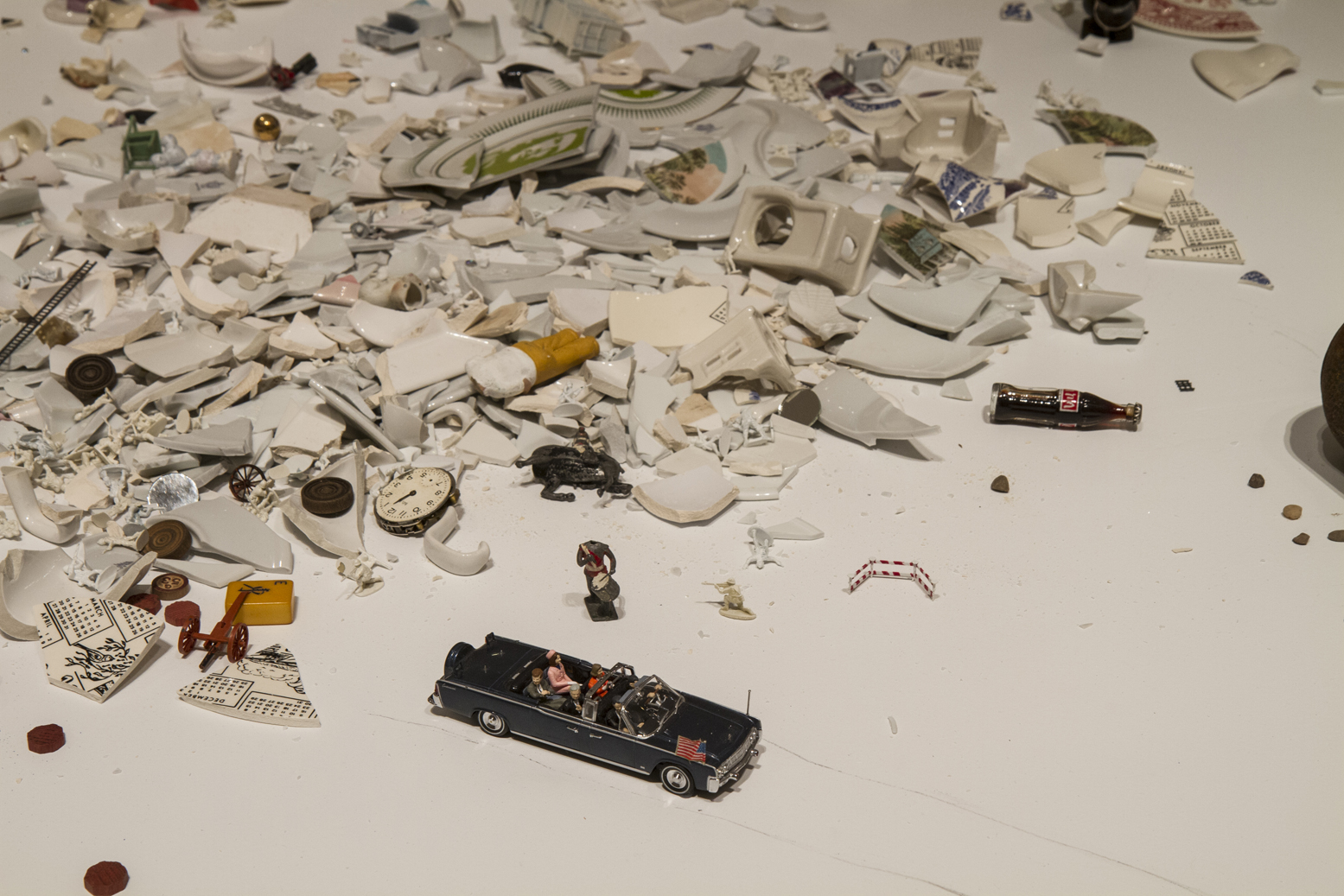
The installation at Malba is set up on a series of flat platforms of various sizes, on which some characters from his familiar cast are engaged in specific tasks: building and destroying, scattering and gathering, going and returning, cleaning, sweeping, getting up, falling down, spilling, and weaving, among other activities. At one end is the tiny man with the axe; a possible beginning if we consider the title, which gives the character a paradoxical prominence considering his scant five centimeters.
"In order for the man with the axe to destroy, Porter, in the opposite direction of time, composes the pieces one by one, reconstructing them. His is a more flexible and uncertain time, in which it is possible to destroy and compose at the same time, to choose one alternative without losing the others, to illuminate a man with an axe and also a gardener watering his plants in the midst of disaster," reflects Graciela Speranza in the essay in the catalog accompanying the exhibition.
With her unusual dialogues, reconstructions, and forced labor, Liliana Porter alters the chronology of history. “Her history of time has become even more sinuous in El hombre con el hacha y otras situaciones breves (The Man with the Axe and Other Short Situations), her most ambitious installation to date, a sui generis retrospective of her previous work, a poetic sum that summons and at the same time destroys her microcosm, in the here and now of a time and space, this time on a large scale,” Speranza analyzes.
On the occasion of the exhibition, Malba published a new catalog on Liliana Porter, featuring the essay A contratiempo (Out of Step) by writer and critic Graciela Speranza and an exhaustive photographic record of the installation. In 2003, the museum co-published, together with the Recoleta Cultural Center, the catalog for her retrospective Liliana Porter. Fotografía y Ficción (Photography and Fiction) (November 2003–February 2004), as part of its program of co-publishing with other institutions.
Liliana Porter
She was born in 1941 in Buenos Aires, Argentina. She studied at the Manuel Belgrano National School of Fine Arts. In 1958, she traveled to Mexico, where she studied engraving at the Ibero-American University. In 1964, she settled in New York and attended the Pratt Graphic Art Center. Together with Luis Camnitzer and José Guillermo Castillo, she founded the New York Graphic Workshop and, in 1967, formulated the concept of FANDSO (free assemblage, non-functional, disposable, serial object). In 1971, she participated in the creation of the Museo imaginario Latinoamericano (Imaginary Latin American Museum), a museum without walls, in opposition to the Center for Inter-American Relations (CIR) and its regressive policies. In 1977, she co-founded and taught engraving at Studio Camnitzer-Porter in Lucca, Italy. From 1991 to 2007, she was a professor in the Art Department at the City University of New York, CUNY, Queens College. Among other distinctions, she received a Guggenheim Fellowship in 1980. She is a corresponding member of the National Academy of Fine Arts (Argentina) and a corresponding member of Argentina for the United States.
Her work is held in numerous public and private collections, including: the Metropolitan Museum, MoMA, Whitney Museum of American Art, and Public Library (New York); Malba, Museo Moderno, and National Museum of Fine Arts (Buenos Aires); Daros Foundation (Switzerland); Tate Modern (London); Patricia P. Cisneros Collection (New York and Caracas); National Library of Paris; Reina Sofía Art Center Museum (Madrid); and Rufino Tamayo Museum (Mexico City).