03/23 — 06/26/23
Gallery 1. Level -1
In conjunction with the exhibition From Heaven to Home: Connections and Intermittencies in Argentine Material Culture, Malba presents Via Pública, a solo exhibition by Argentine artist Marcela Sinclair (Buenos Aires, 1968).
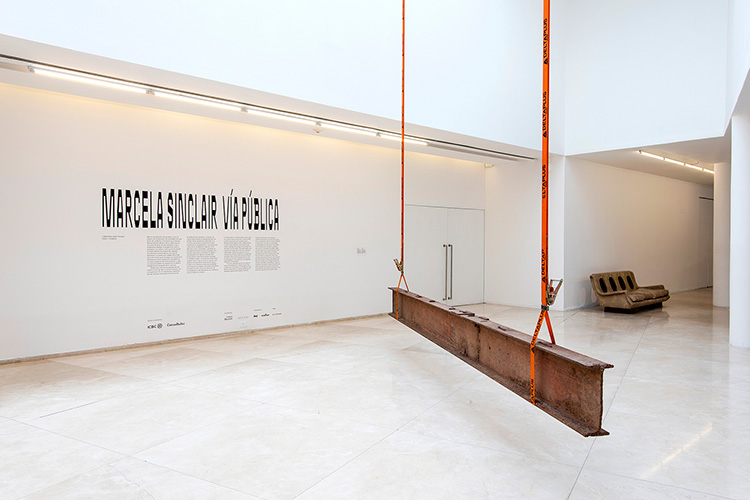
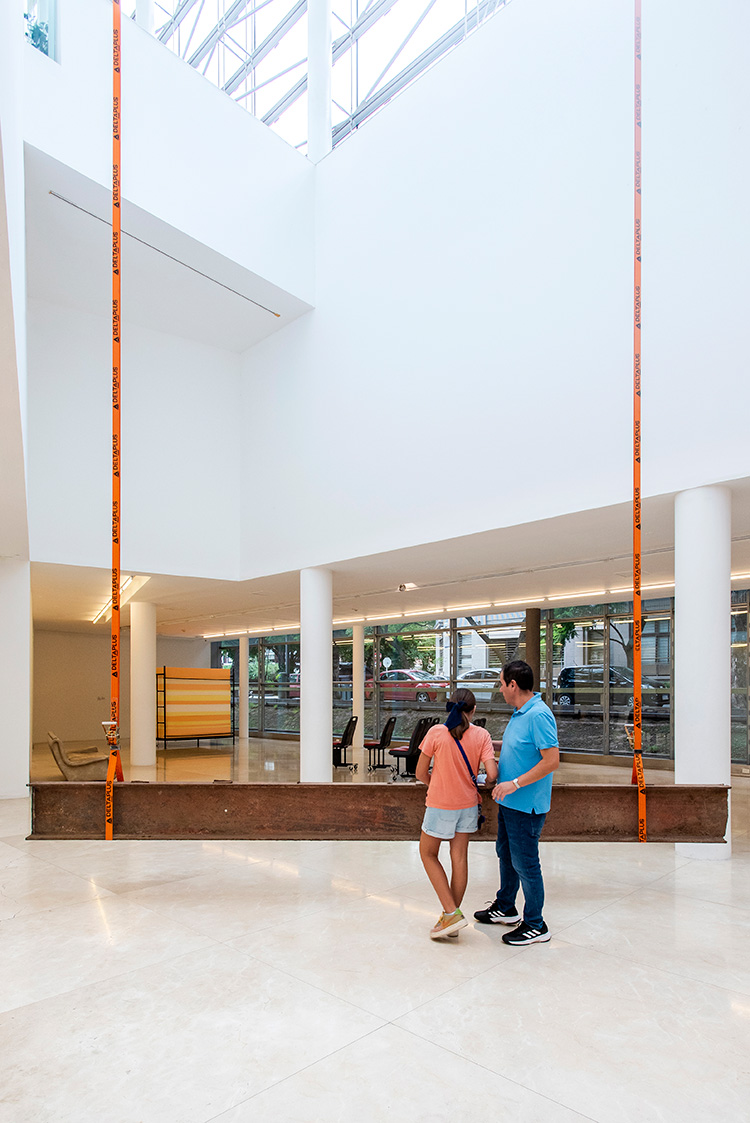
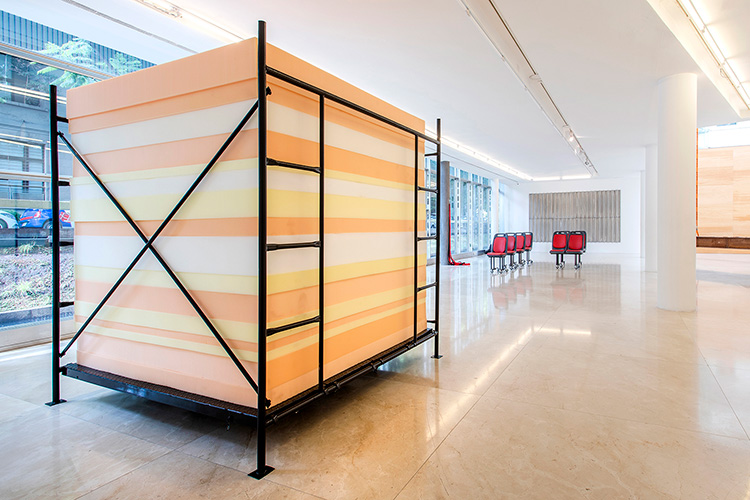
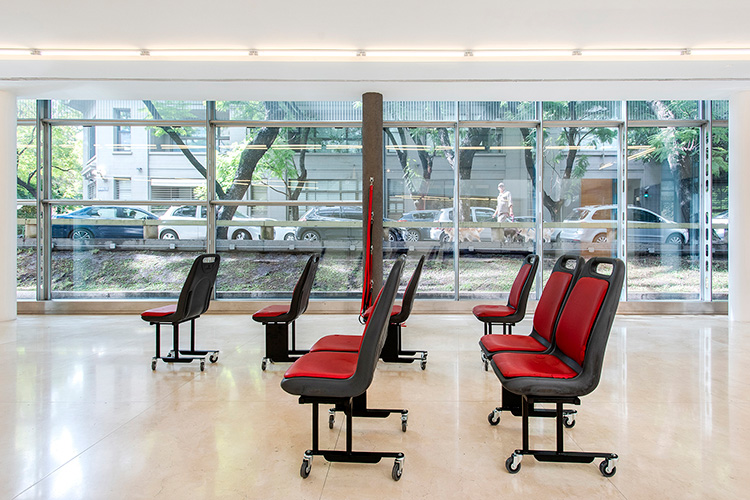
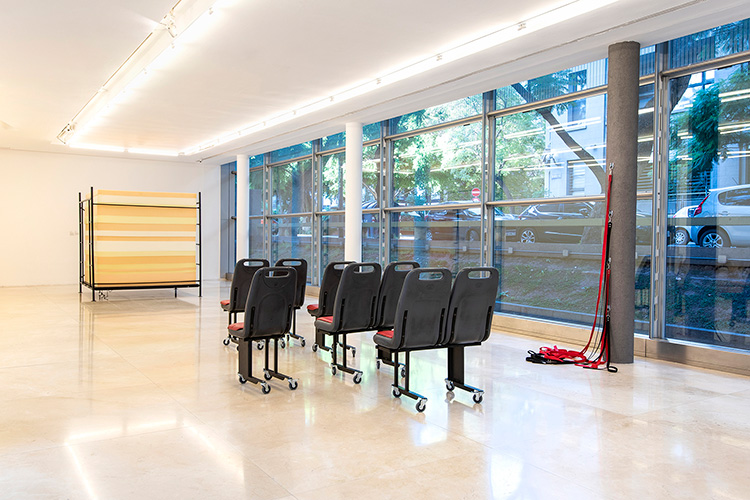
The project is part of a new research process by Sinclair, based on the consideration of the public sphere as a space for community building, conflict exposure, and consensus formation. The artist presents a series of site-specific works whose imagery challenges the antagonism between the domestic and the urban. As a starting point, she uses the figure of the swing. A hammock made of a demolition beam and ropes hanging from the museum's triple height brings into play the assumption of an architecture of swaying, of restlessness. Contrary to spatial closure, this work suggests a space capable of pulsating with a vocation for the public, longing for the choreography of the collective.
"In Vía Pública, Sinclair revisits the figure of the swing. Conceived as a prosthesis for the museum, it reintroduces the idea of an architecture of balance. A construction that pulsates with an urban vocation, yearning for the choreography of the collective. Thus, through the logic of the specific site, this exhibition is inspired by the idea that spaces are not mere containers of objects, but areas of interaction, fictionalization, and mixture, of confluence between internal and external circuits," explains curator Nancy Rojas.
For more than a decade, Sinclair has been exploring ways to link his artistic practice with architecture. Two recurring tactics feature in his installations: the intervention of existing buildings and the design of objects that generate shifts in meaning. These operations respond to his quest to undermine the foundations of architectural practice.
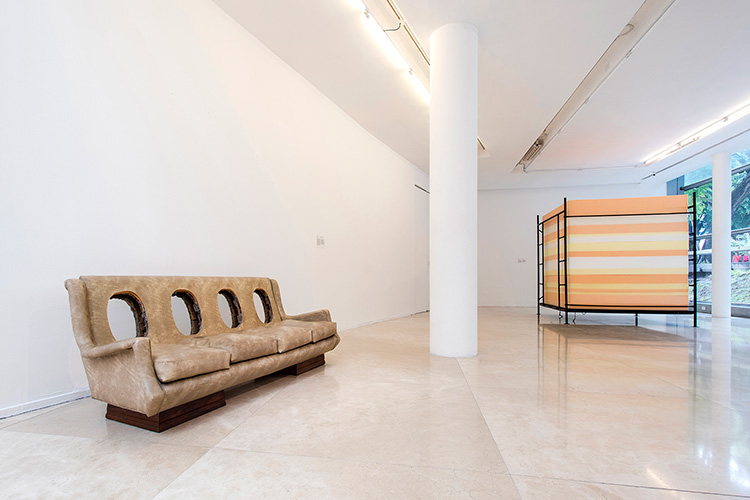
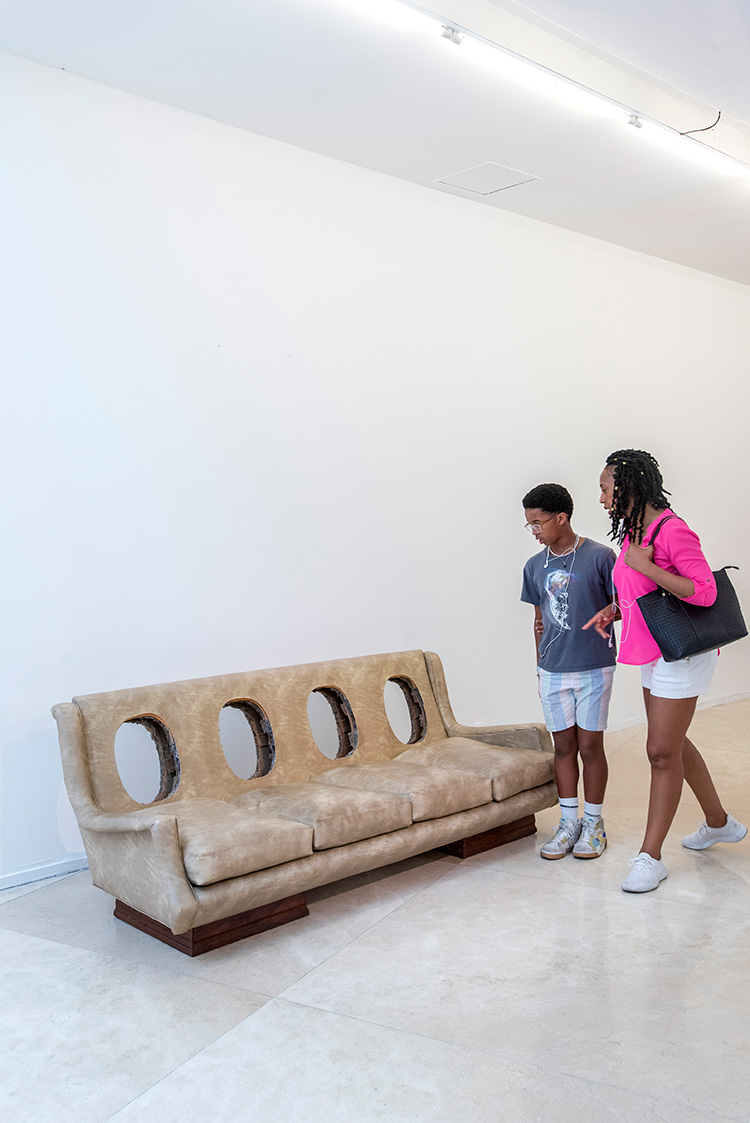
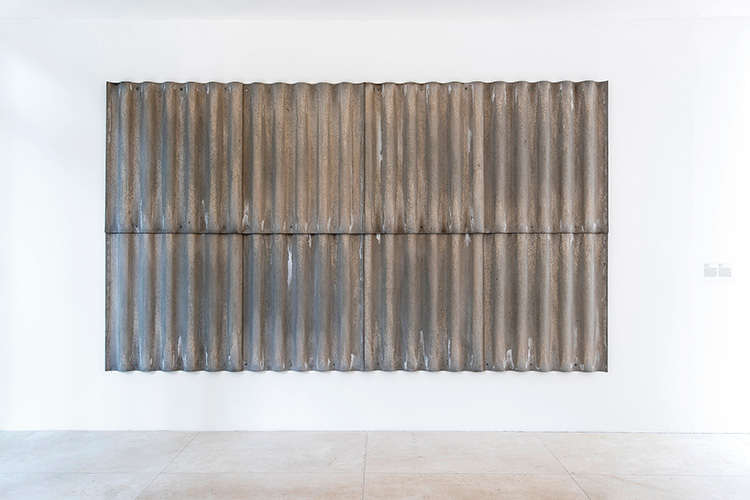
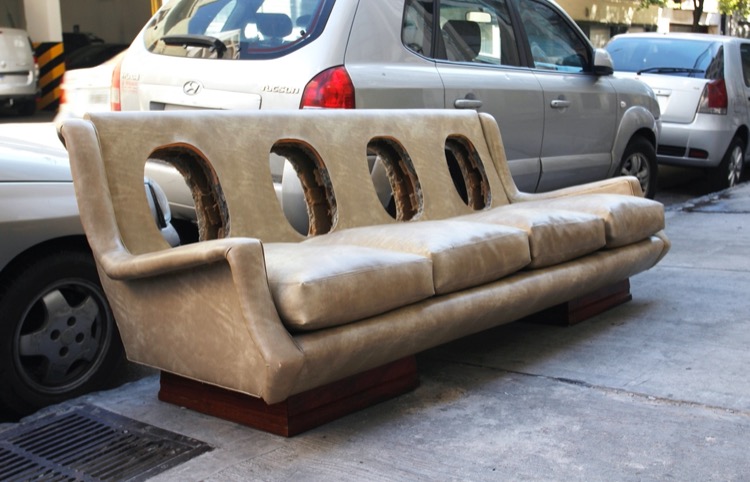
Drawing on a critical perspective of spatial normalization and the idea of a predictable and calculable future, Vía pública conceives its pieces as devices designed to question naturalized habits. They are objects and installations (mostly interactive) where urban furniture and home furnishings converge. The materials include tools from the construction environment and other more versatile ones used in different manufacturing systems. These works suggest that there is no single use for things; through instances of interactivity, they focus on the different modes of sociability that objects propose.
Vía Pública is thus inspired by the idea of spaces as areas of interaction, fictionalization, and mixture, where the inside and outside converge.
Curator: Nancy Rojas.
Marcela Sinclair
He is an artist and teacher. In his projects, he frequently explores themes of displacement in geometry through practices that include drawing, painting, sculpture, installation, and site-specific work. He graduated from the National School of Fine Arts in Buenos Aires and studied with artist Tulio de Sagastizábal. He has completed residencies at El Basilisco (Buenos Aires, 2009), Lugar a Dudas (Cali, Colombia, 2009), and FAARA, Fundación Ama Amoedo (José Ignacio, Uruguay, 2021). She received a grant from the National Arts Fund of Argentina (2012) and the institution's first prize for sculpture (2017). Her work has been exhibited in institutions in Argentina, Uruguay, Chile, Colombia, Spain, the United States, Italy, and Germany. His recent solo exhibitions and participation in group shows include: Algunos órganos poseen dobles esqueletos, Mite, Buenos Aires (2022); Disrupciones, Collins Park, Art Basel Miami, Miami Beach (2019); Fuga, joya, Mite, Buenos Aires (2018); Hogar, dulce hogar. Hábitos artísticos contemporáneos, MUNTREF Museum of Visual Arts, Buenos Aires (2018), Ella es una cosa encantadora, Cerralbo Museum, Madrid (2017), El future ha llegado (have un tiempo), Kirchner Cultural Center, Buenos Aires (2016).
Catalogue
The catalog for the exhibition Vía Pública is the first publication on Marcela Sinclair's work. Focusing particularly on the site-specific installations she conceived for Malba, it brings together the fundamental concerns that underlie her entire career. Nancy Rojas' curatorial essay explores the meanings of the pieces included in the exhibition—reproduced in room views—while historian and curator Aimé Iglesias Lukin's text reviews her previous work—illustrated with archival images—and highlights her sustained work as a teacher.