04.29 — 06.20.2011
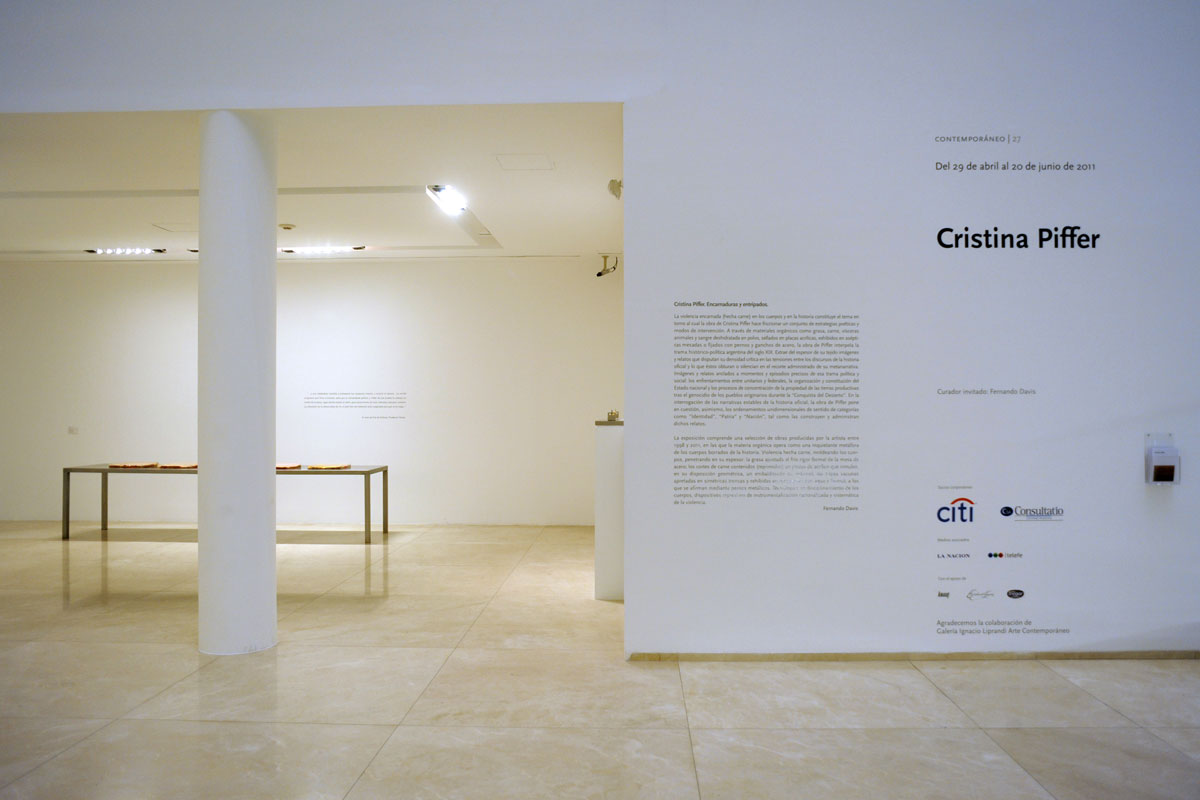
Curator: Fernando Davis
A selection of works by artist Cristina Piffer (Buenos Aires, 1953), created between 1998 and 2011, offering an overview of her artistic practice, which focuses on examining the historical and political fabric of 19th-century Argentina. For the first time, a work from the series Neocolonial (2011)—created specifically for this exhibition—is on display.
The artist invites us to reflect on the tensions that exist between the official narrative and the silenced voices of the protagonists of various episodes in 19th-century Argentine history: the conflicts between Unitarians and Federalists, the organization and establishment of the national state, and the processes of concentration of ownership of productive lands following the genocide of Indigenous peoples during the Conquest of the Desert. At the same time, Piffer questions the meaning that official history has ascribed to categories such as identity, homeland, and nation.
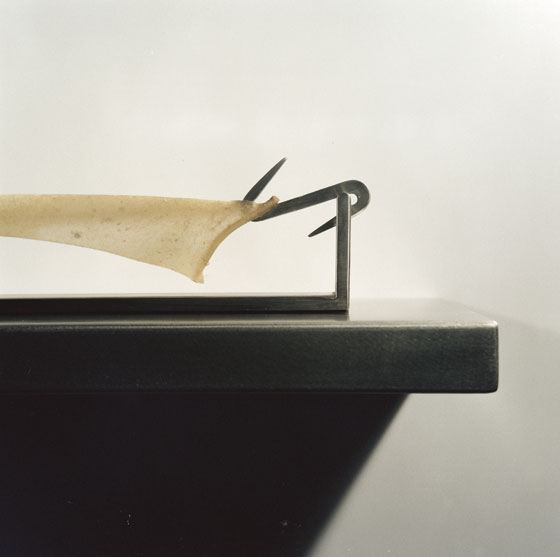
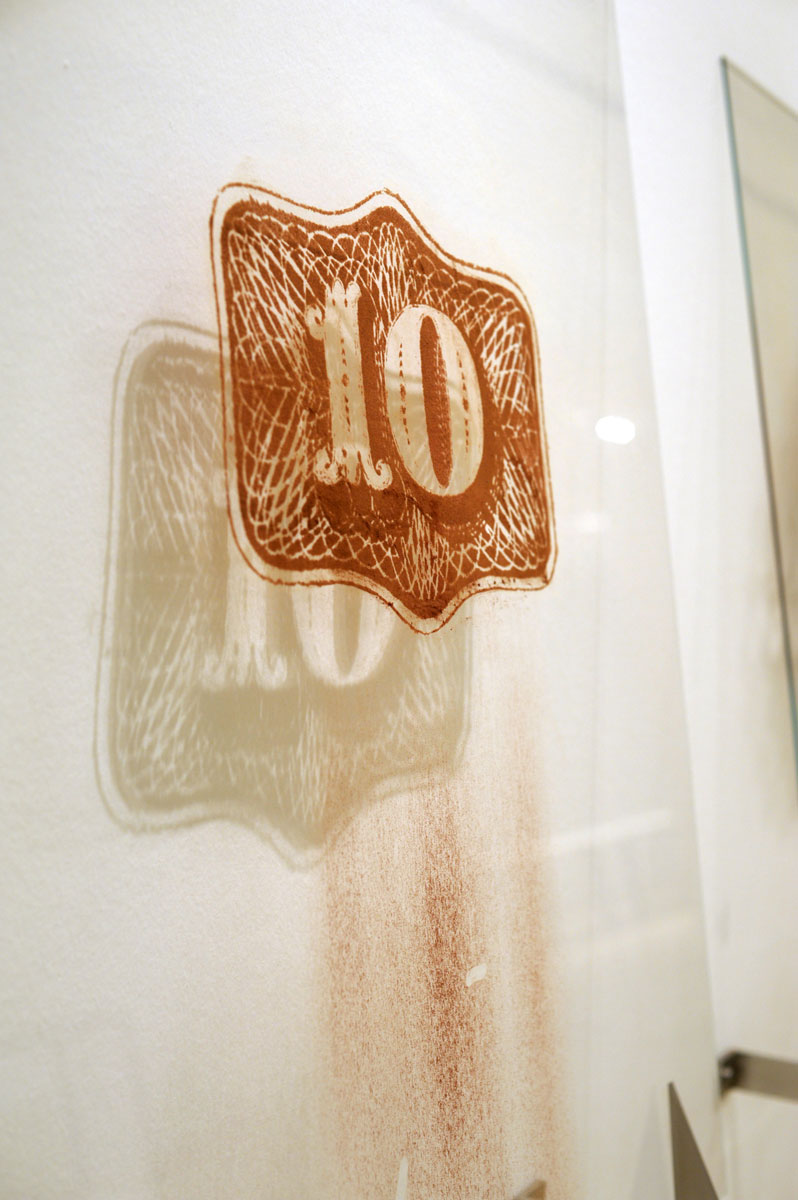
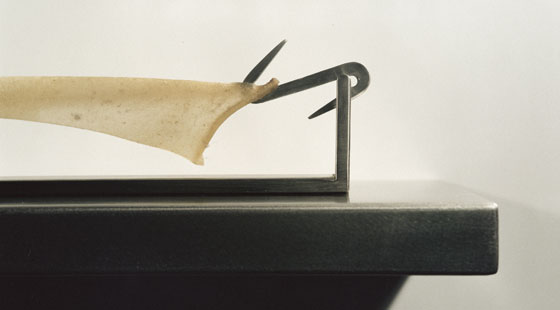
In her works, the artist uses various organic materials such as fat, meat, animal entrails, and dehydrated blood powder, sealed within acrylic panels and displayed on sterile countertops or secured with steel bolts and hooks. In this sense, organic matter functions as a disturbing metaphor for bodies erased from history. “Violence embodied (made flesh) in bodies and in history constitutes the theme around which Cristina Piffer’s work brings together a set of poetic strategies and modes of intervention,” explains Fernando Davis, curator of the exhibition.
Cristina Piffer
Buenos Aires, 1953. He graduated from the School of Architecture at the University of Buenos Aires. In 2001, he received the Grant for Artistic Creation from the National Arts Fund. In 1998, the project La Cruz del Sur, with Hugo Vidal and Claudia Contreras, was shortlisted for the Parque de la Memoria. Around 2003, she participated in a public art project in San Juan, Puerto Rico. The following year, she was invited by First View to participate in the Berlin-Buenos Aires Dialogues cultural exchange program to carry out an urban intervention in that city. In 2004, she collaborated with Hugo Vidal on the documentation of projects and actions at the Center for Documentation and Research on Leftist Culture in Argentina (CeDinCi). She held the solo exhibition Entripados at the Luisa Pedrouzo Gallery (2002).
She has participated in numerous group exhibitions, including Radical Shift: Political and Social Upheaval in Argentine Art since the 1960s, Morsbroich Museum, Germany (2011); With Blood in the Eye, Ignacio Liprandi Contemporary Art Gallery (2010); July Class in September, Cultural Center of Cooperation (2010); The Innards of Art, Imago, OSDE Foundation (2008); 30 Years, 30 Artists, Recoleta Cultural Center (2006); Between Silence and Violence, Telefónica Foundation Space (2004); Between Silence and Violence, Sotheby’s, New York (2003); Latest Trends, Museum of Modern Art of Buenos Aires (2002) and Like Flesh and Blood, with Claudia Contreras, at the Borges Cultural Center (1998).
She participated in the 2nd Bahía Blanca Biennial (1997), the 3rd Ibero-American Biennial in Peru (2002), and the São Paulo-Valencia Biennial in Valencia, Spain (2007). She received the Artist of the Year Award from the Association of Art Critics (2002) and the Diploma of Honor in the objects category at the Konex Awards (2002), among other honors. She lives and works in Buenos Aires.