Event Details
This event finished on 01 March 2015
- Categories: Exhibitions
- Tags: Plantilla histórica
10.31.2014 — 03.01.2015
Opening: Thursday, October 30, 7:00 p.m.
Curators: Mari Carmen Ramírez and Marcelo Pacheco
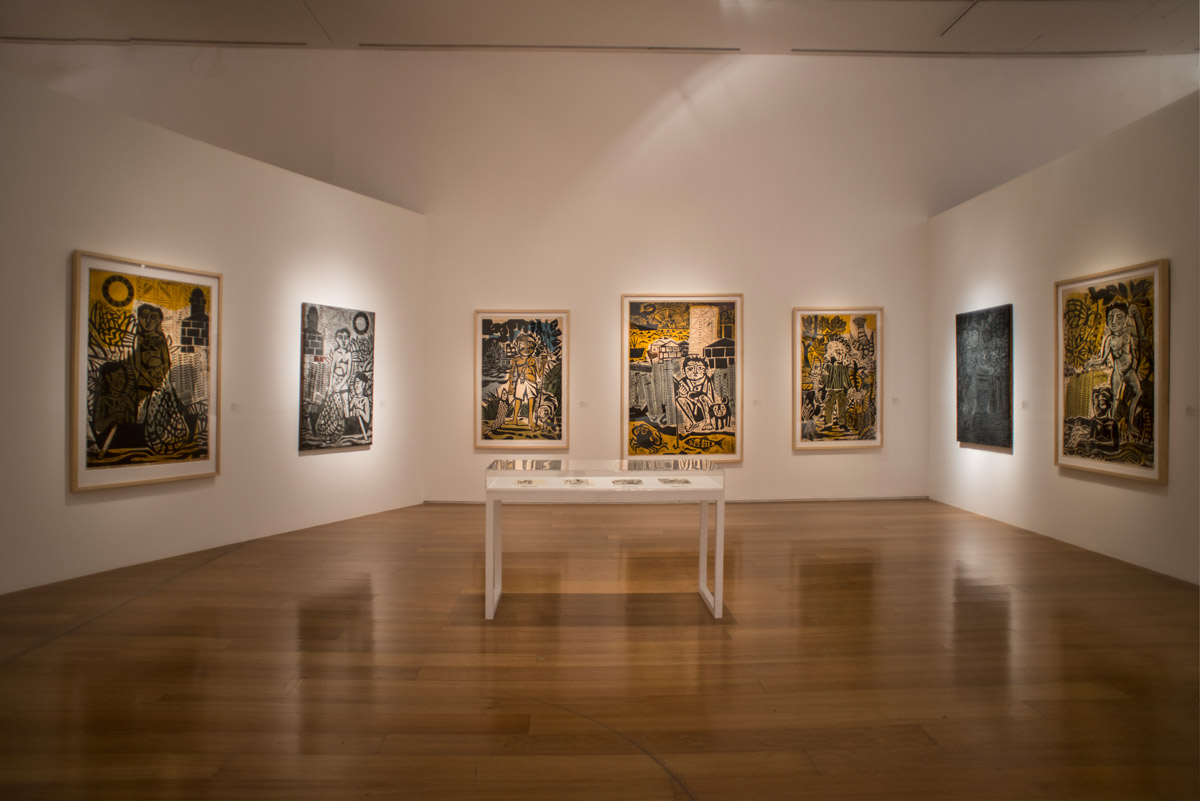
First exhibition of Antonio Berni (Rosario, 1905–Buenos Aires, 1981) that comprehensively presents his famous series Juanito Laguna and Ramona Montiel and includes the Monsters of his Nightmares. Produced jointly by MALBA and the Museum of Fine Arts, Houston (MFAH)—as part of the collaboration agreement that both institutions have maintained since 2005—the exhibition brings together a collection of 150 works (two-dimensional paintings, engravings, xilocollages and xilocollage-reliefs, assemblages, and polymaterial constructions) created between 1958 and 1978, on loan from the artist's family and twenty-five public and private collections in Argentina, Uruguay, the United States, Spain, and Belgium.
For the first time in our country, virtually unknown pieces are being exhibited, such as the collection of works from Belgium, consisting of large assemblages such as Ramona bebé (1962), La apoteosis de Ramona (1971), and La familia de Juanito emigrated (1972). Also on display are emblematic monumental works such as El mundo prometido a Juanito Laguna (1962) —one of the great masterpieces of this period, from the collection of the Argentine Foreign Ministry— Juanito aprende a leer (1961) and Pesadilla de los injustos (1961) —both from the National Museum of Fine Arts in Buenos Aires; Juanito lleva la comida a su padre peón metalúrgico (1961) from the Museum of Modern Art in Buenos Aires; Juanito va a la ciudad (1963) from the MFAH collection; La gran tentación (1962) from the MALBA collection; and La pampa torments (1963), among others.
Also noteworthy is the set of five engravings on Juanito Laguna —on loan from the Castagnino+macro Museum collection in Rosario—which Berni first presented in 1962 at the Venice Biennale and for which he won the Grand Prize for engraving and drawing.
Antonio Berni: Juanito and Ramona attempts to place Berni in his international context, highlighting the diversity of his output, the result of a constant quest to expand the central concerns of postwar artistic movements.
The exhibition
Antonio Berni: Juanito and Ramona is the result of three years of research and production by the teams at MALBA and the MFAH, together with various specialists who worked on restoring, cleaning, consolidating, and framing the works. It also benefited from the collaboration of the Espigas Foundation and José Antonio and Inés Berni, who opened their archives especially for the research.
It is displayed in three rooms of the museum and is organized into thematic groups that follow the development of the Juanito and Ramona series. A special feature is the inclusion of approximately 20 woodcut blocks, which served as matrices for the woodcut collage reliefs and were also exhibited in a retrospective of Antonio Berni at the Visual Arts Center of the Torcuato Di Tella Institute in Buenos Aires in 1965.
The exhibition is co-curated by Mari Carmen Ramírez, Wortham Curator of Latin American Art at the MFAH and Director of the International Center for the Arts of the Americas (ICAA); and Marcelo Pacheco, Chief Curator at MALBA from 2002 to June 2013. The team is rounded out by Michael Wellen, assistant curator of Latin American art at the MFAH; and Victoria Giraudo, executive curatorial coordinator at MALBA.
It was first presented at the MFAH from November 2013 to January 2014 and then traveled to the Phoenix Art Museum from June to September of last year. It was the first retrospective exhibition of Antonio Berni's work in the United States in 40 years.
Juanito, Ramona and the monsters
In the late 1950s, the figure of a child began to appear as a recurring theme in Berni's work. Juanito Laguna emerged as Berni's first character. He was inspired by the hundreds of children the artist encountered in the slums and poor suburbs that had existed in the city of Buenos Aires since the 1930s and had even grown in recent years.
Berni conceives Juanito as the son of a laborer, a worker in the metal industry who lives in the neighborhood located in the Flores marshlands and spends his time playing freely in the street. As Berni himself explains: “Juanito is a poor boy, but not a poor spirit. He is not defeated by circumstances, but rather a being full of life and hope, who overcomes his circumstantial misery because he senses that he lives in a world full of promise.”
He first appeared internationally at the 1962 Venice Biennale, where Berni won the Grand Prize for engraving and drawing. In his constructions and environments, Berni shows him celebrating Christmas, learning to read, flying a kite, playing, swimming in a lagoon with his dog, and bringing food to his father at the factory where he works. His world is made from scraps of fabric, metal sheets, crushed cans, plastic containers, wood, cardboard, and scrap metal, industrial waste that the artist masterfully assembles into monumental constructions.
In Juanito's series, Berni was interested in working with the environment, the landscape, the corners of the slums with overflowing piles of waste. “Juanito's collages and assemblages worked in their actual recycling on large wooden supports where the artist glued, screwed, and nailed the waste,” explains Pacheco.
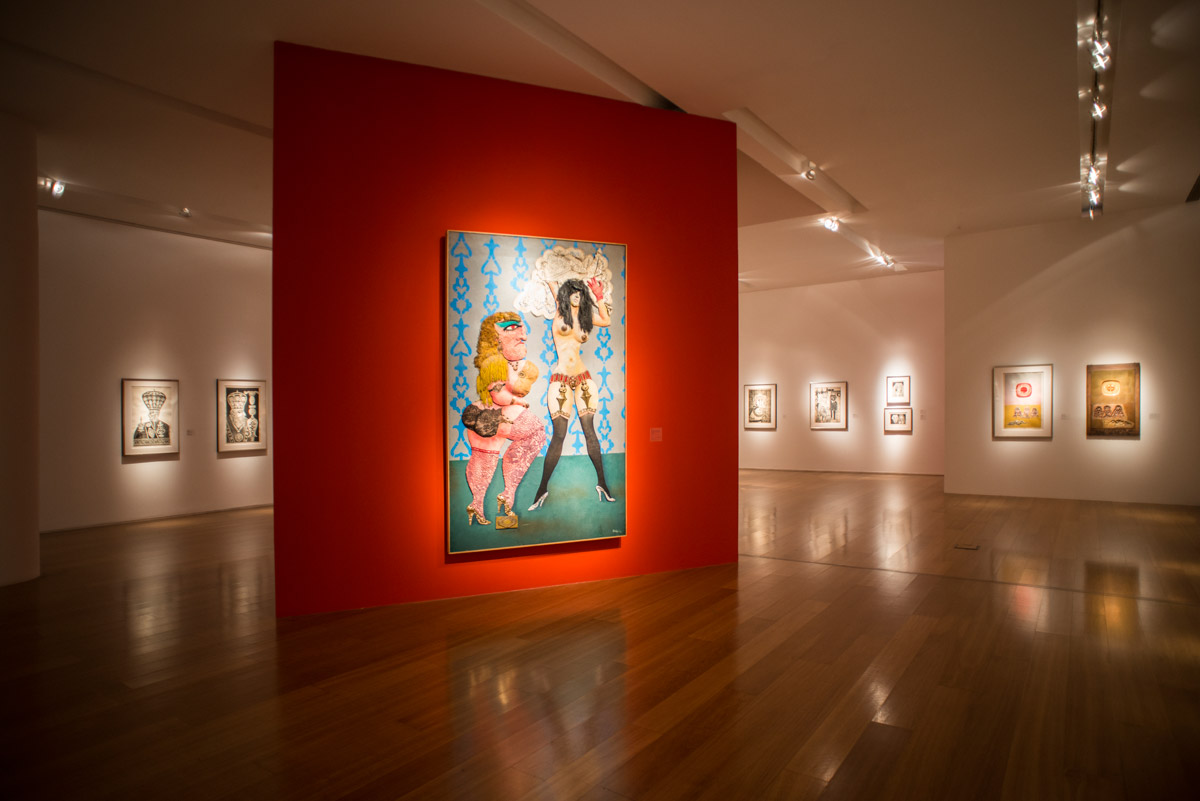
Berni began developing the character of Ramona Montiel while living and working in Paris, starting in 1962. Ramona is a young woman from the neighborhood who lives in the heart of the big city: Buenos Aires. Overwhelmed by her work as a seamstress and seduced by luxury and splendor, as well as by false promises of “a better life,” she becomes a prostitute.
For this series, the artist rummaged through Parisian flea markets looking for materials with which to compose his new character: old sequined dresses, pieces of lace, laces, trimmings, and other accessories with which the women of the Belle Époque adorned themselves. Although Bern's work features photographs of brothels in Rosario as early as the 1940s, and then a figure very similar to Ramona in the late 1950s (in his oil painting La boda), Ramona is the product of the artist's Parisian conception, nourished by the tradition of French cabaret and its leading figure: the chorus girl.
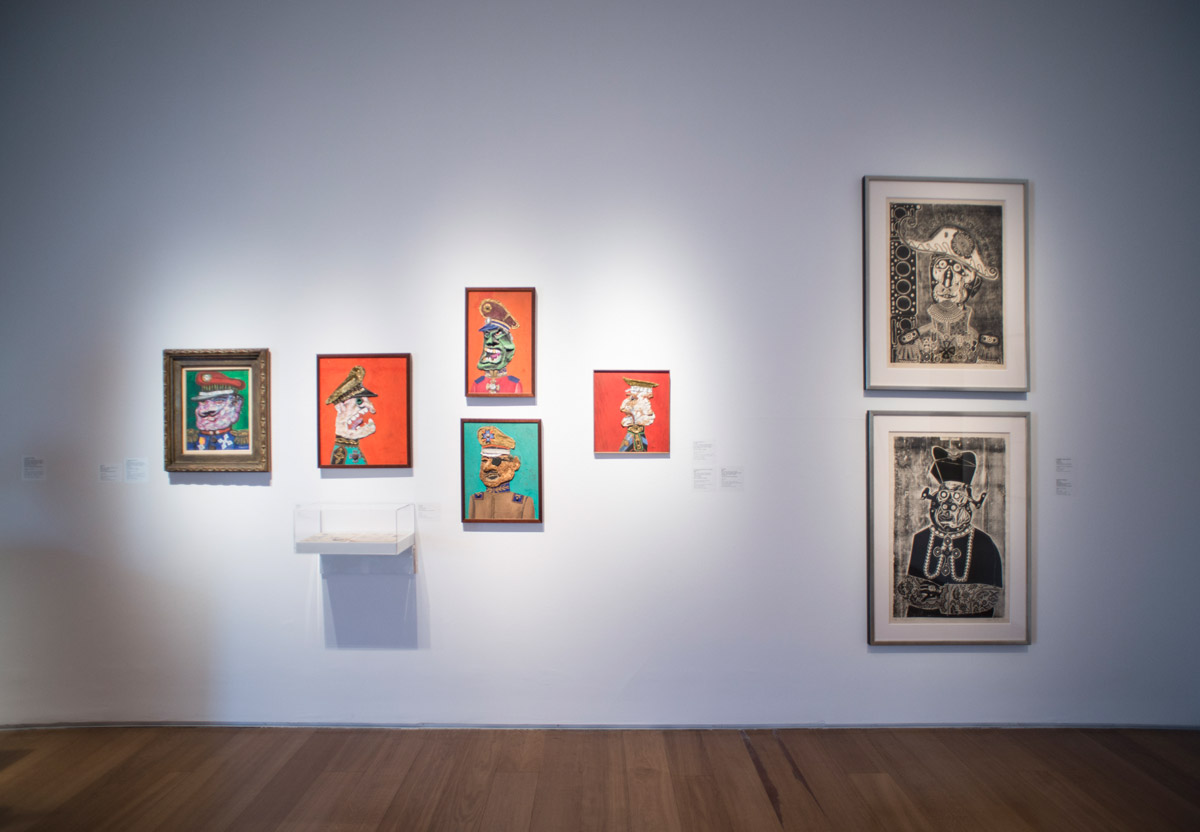
Through Ramona, the artist explores different aspects of the social and historical pressures placed on women, as well as the influence of television and advertising in shaping female social sensibilities and consumerist desires. The artist depicts her accompanied by her powerful circle of influential friends from all sectors of society: a general, a sailor, a criminal, an ambassador, and a bishop, among others, as a star of the café concert circuit and on her travels to Spain.
While he made more than thirty assemblages to portray Juanito, he made fewer than ten about Ramona, most of which have been lost or whose whereabouts are unknown today. Instead, she became the subject of a long series of innovative engravings in which the artist carried out his most daring experiments with this technique.
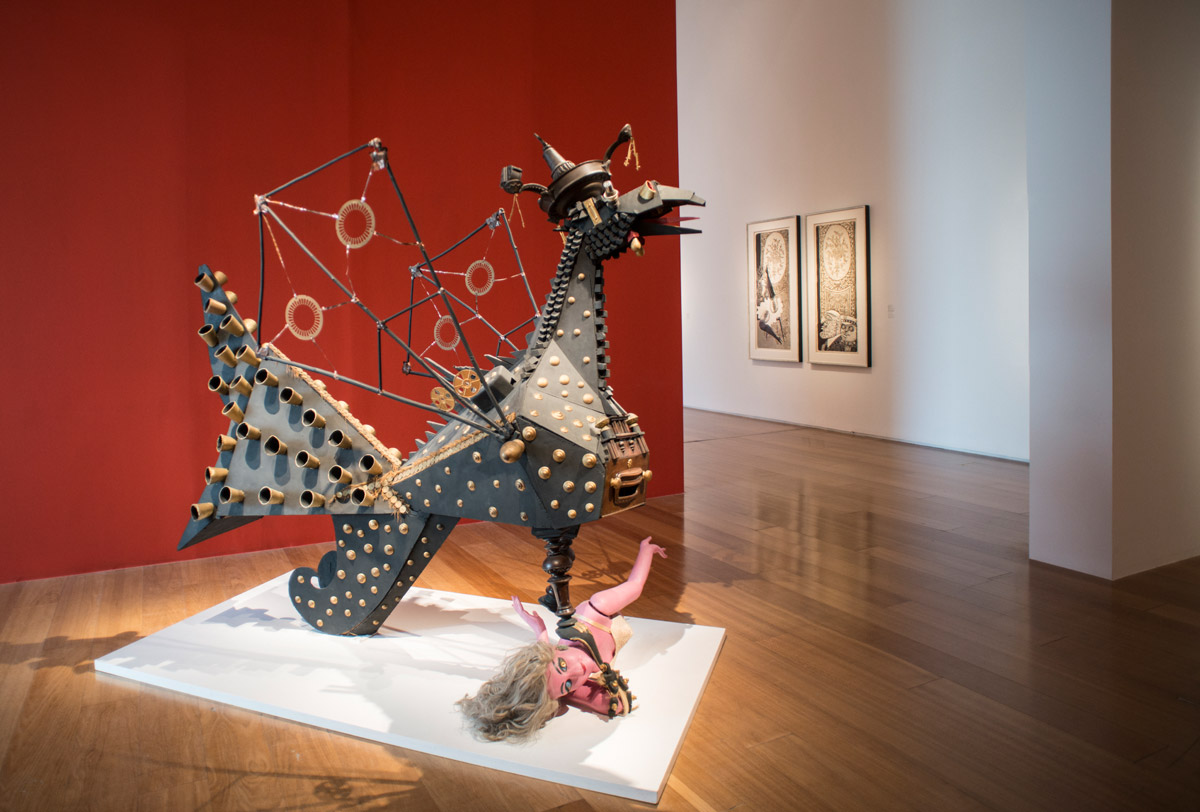
The monsters created by Antonio Berni initially represented, in two dimensions, the fears that haunted Juanito in his everyday landscape or environment, but later, in three dimensions, they became the product of nightmares related to Ramona's unfulfilled desires. Like the assemblages that tell Juanito's story, these fantastic creatures emerge from discarded objects and recycled materials; but, unlike those, they transfer the artist's research to the scale of large objects. That is why Berni christened them “polymetric constructions.”
Since 1964, Berni divided his monsters into two groups: Monstruos cósmicos and Monstruos infernales que desafían a Ramona Montiel. The humorous nature of these bizarre creations caused quite a stir when they were first exhibited in his retrospective at the Instituto Di Tella in 1965. Not only did they challenge conservative notions of “good taste,” but they also showcased the artist's imagination and virtuosity in the technique of assemblage, which brought the work closer to the sculptural object. The aesthetics of the monsters draw on sources from both art history and popular culture: they refer to Latin American street and carnival festivities, with Freudian influences, Catholicism, and other pagan cults such as the Bolivian diablada and the allegorical floats of the Rio de Janeiro carnival, among others.
Testimony Antonio Berni
In the Press
«El conjunto confirma a Berni como un narrador visual único, capaz de aunar la tradición figurativa de la pintura con la radicalidad de las vanguardias modernas». El regreso de Juanito y Ramona, La Nación, 24-10-14.
«Estos son los dos personajes emblemáticos de Berni y esta es la exposición más grande jamás organizada sobre ellos». Con Juanito y Ramona, vuelve Antonio Berni y nos habla del presente, Clarín, 26-10-14.
«La serie de Ramona es una saga visual y narrativa deslumbrante, también en el aspecto técnico». Idas y vueltas de Juanito y Ramona, Página 12, 11-11-14.
«Dos personajes nacidos de su contemplación de los márgenes de la sociedad, quienes a través del desecho –de todo aquello que sobra– son una muestra de la humanidad desgarradora que acontece en los bordes». El coleccionista de restos, Perfil, 22-11-14.