28/09 — 08/10/23
Hall. Level 0
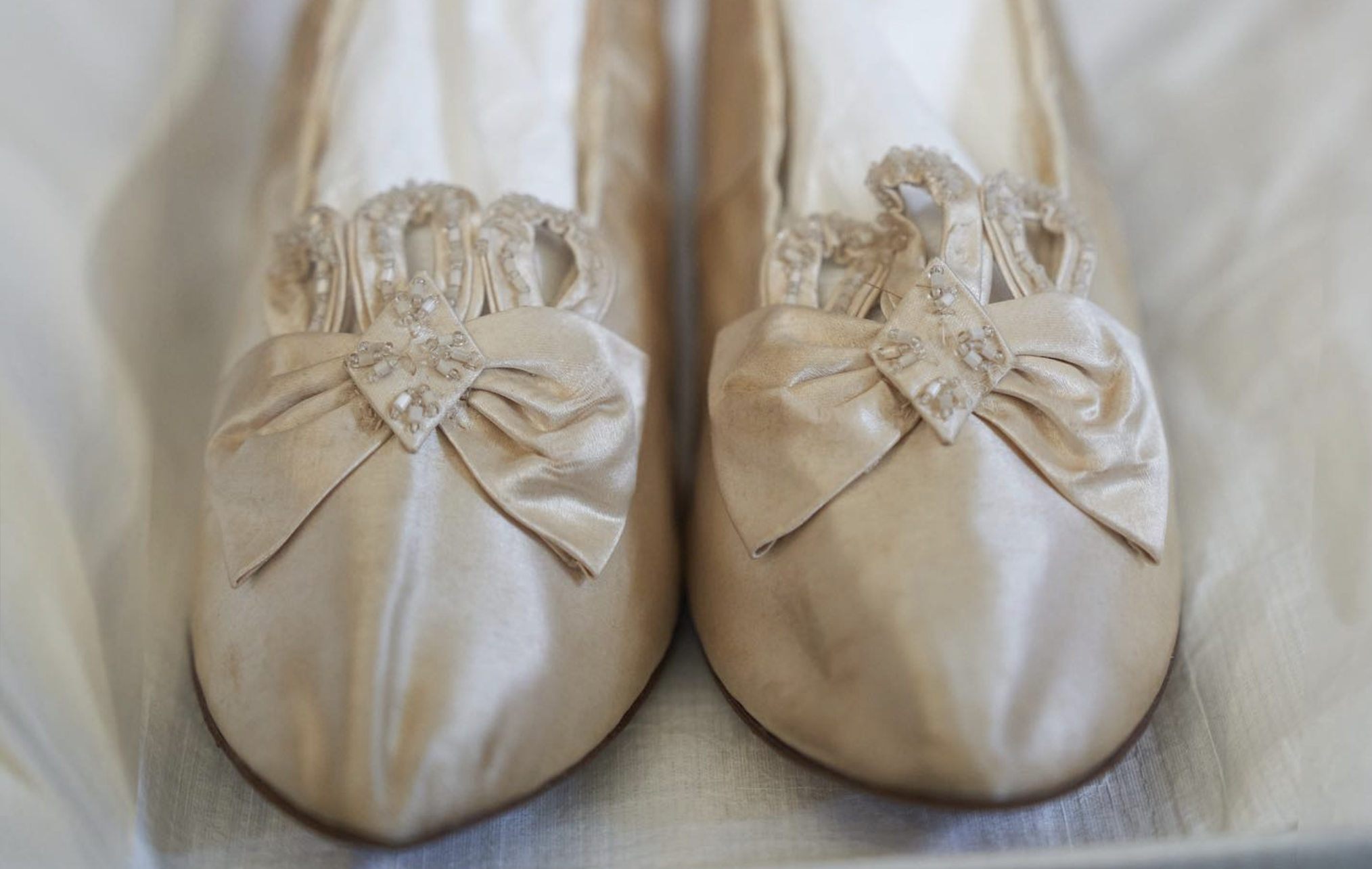
As part of Semana de la Alta Costura (SAC), and thanks to an initiative by Elina Costantini, its founder and director, the Museo de la History del Traje (MHT) is presenting for the first time an exhibition paying tribute to designers who set trends in Argentine haute couture. Co-curated by the MHT and SAC teams and held at Malba, the exhibition traces the history of national haute couture through an important selection of garments and accessories from the MHT collection and some private collections. The collection, comprising more than 70 pieces, demonstrates the quality of local designers' workmanship, reflects the magnitude of the segment, and highlights the importance of sustaining the tradition of textile crafts and techniques in this precious métier in our country.
In fashion studies, there is ongoing debate about its status within the arts. In this sense, haute couture pieces are often considered artistic, mainly because they are unique pieces, “sculpted” in the atelier by the designer and their assistants, in the same way as art. But what is considered haute couture? Its tradition began in the late 19th century, when designer Charles Frederick Worth redefined the future of fashion through the creation of unique, signed garments, from which the term haute couture was coined. This work has remained intact to this day and involves dozens of seamstresses, milliners, shoemakers, and other specialists in extremely delicate crafts, such as hand embroidery, feather work, lace weaving and fitting, pleating, and dyeing.
For this exhibition, we have selected pieces by European designers who worked in our country—Maison Carrau, Jacques Dorian, Fridl Loos, and Rosina Corradini—along with designs by Argentine creators such as Saint Félix, Henriette, Paco Jaumandreu, Carola, Medora Manero, Vanina de War, Hernán Fragnier, Javier Musetti, and Jorge Ibáñez. All of them have transcended the métier through the definition of a unique style linked to the use of certain materials or the development of form, the work of textures, etc. The dresses are accompanied by various accessories typical of the field, such as shoes, powder compacts, vanities, handbags, stockings, and headdresses of national and international origin and local use.
Project and Direction: Elina Costantini
SAC – Semana de la Alta Costura
Curators: Elina Costantini y Victoria Salías
Designers
Carola
Vanina de War
Jacques Dorian
Fridl Loos
Henriette
Maison Carrau
Medora Manero
Madame Saint Félix
Paco Jaumandreu
Rosina Corradini
Javier Musetti
Jorge Ibáñez
Hernán Fragnier
Biography of the designers
Carola
In 1944, Carola Florenza de Renieri began her legacy with the opening of her boutique, Carola, located at Talcahuano 1188. For almost two decades, until the late 1960s, she occupied a prominent and distinguished place in the Argentine fashion world. Her focus was on creating elegant evening gowns and exquisite wedding dresses. In addition, she had the honor of dressing several wives of Argentine presidents, thus consolidating her influence on the fashion scene and society of the time..
Vanina de War
Vanina opened her first fashion house in Paris, as a result of growing up in a family of diplomats. The Buenos Aires headquarters of her fashion house opened its doors in 1939 in a petit hotel at 1307 Arenales Street. Among her designs, she popularized the use of knitwear, suede garments embellished with stone embroidery, and chiffon dresses with leather bias binding. Her everyday attire contrasted with the austerity of Franciscan sandals, along with the use of necklaces as belts and emerald bracelets on her right forearm.
Jacques Dorian
Paolo Bassegio, a prominent haute couture designer born in Venice, chose to change his name to a more French style when he settled in Argentina in 1951. The talented creator adopted the name Jacques Dorian, both for himself and for his prestigious fashion house, located on Marcelo Torcuato de Alvear Street. In his iconic establishment, he not only organized elegant fashion shows, but also filled the space with the exquisite perfumes of Dior and Carven. In addition to his contributions to women's fashion, Jacques Dorian boldly ventured into the world of men's fashion, introducing intense colors that broke with the traditionalism of Buenos Aires customs.
Fridl Loos
An Austrian designer and artist trained at the Vienna School of Art, in 1925 she changed her maiden name, Fridl Steininger, to a store from which she sold fabrics and dresses worn by Hedy Lamarr, Lana Turner, and Helena Rubinstein. When she settled in Argentina in early 1940 with architect Walter Loos, she contributed to the veneration of folk aesthetics and textiles from northwestern Argentina. Her first job in Buenos Aires was at the Argentine branch of the Drecoll fashion house, where her designs captivated actress Delia Garcés de Zavalía, who became her client and promoted her designs in the films directed by Alberto de Zavalía. Her distinctive style is characterized by her innovative use of textiles: on a trip through Salta and Jujuy, Loos discovered barracanes fabrics and ponchos and incorporated them as raw materials for her designs, which she also sold in department stores in New York at the time.
Henriette
Fashion house founded in 1918 by Sarina Schwartz, the eldest of four daughters of a Romanian furrier who settled in Argentina. Initially, the store was located on Arenales Street, but later moved to Santa Fe Avenue. The workshop was run by Eva Schwartz, while Enriqueta, whose name was changed to Henriette, with a more French touch, was in charge of attending to and advising customers, as well as receiving orders for bridal trousseaus. In the 1960s, her younger sister, known as “Nona,” joined the company and revolutionized bridal fashion trends by introducing dresses in shades of pink and aqua green and adopting poncho-inspired silhouettes.
Maison Carrau
Founded in 1880, the fashion house had a tradition of Buenos Aires elegance and aristocratic prestige. Run by Adèle Barbier de Renard—maternal great-grandmother of textile artist Silvina Trigos Foussadier—who arrived in Argentina at the end of the 19th century hired by the Pusterla family, the firm specialized in importing Limoges porcelain and Baccarat crystal. After initially establishing themselves in Rosario, they opened a department store on Florida Street in Buenos Aires. They decided to add fashion to their range of Catalan porcelain and crystal, and so they hired Adèle Barbier de Renard, who traveled alone from France to run the house. Maison Carrau offered a wide range of specialties, including furs, hats, evening gowns, ball gowns, and wedding dresses. They produced designs sent from famous European houses such as Worth, Chernet, Callot Soeurs, Paquin, and Doucet for clothing, and Reboux, Ester Meyer, and Georgette in millinery. Later renamed Maison Carrau Haute Couture to give it a French touch, it closed its doors in 1970. Among its prominent clients were the Chilean Eugenia Errázuriz, a fashion icon, and the wife of the painter Eduardo Sívori.
Medora Manero
With a background that included studies in fine arts, music, and interior design in Buenos Aires, this designer opened her first fashion workshop in 1964 in a house in Acassuso. Over the years, she moved her business to a store in the Galería del Este and later to a house and atelier in San Telmo. Her distinctive style featured capes adorned with bells and sets of three or four garments that complemented each other. Her mastery of textures allowed her to create striking geometric compositions.
Madame Saint Félix
The founder of this fashion house was María Epifanía Schiaffino de Saint Félix, a descendant of an Italian family linked to the world of painting. Her goal was to interpret European fashion, especially the designs of Jeanne Lanvin, Jean Patou, and Elsa Schiaparelli, on behalf of the Buenos Aires elite in the 1930s. By 1940, the firm was already well known and had a distinguished clientele listed in the “Guía Social de Buenos Aires” (Social Guide to Buenos Aires). The workshop employed a hundred seamstresses who not only made custom dresses, but also daywear, cocktail dresses, and coats. Emma Saint Félix, together with her sister María Elena, continued the legacy of the fashion house founded by their mother, dressing the granddaughters of the first clients. Emma led the fashion house until 2005.
Paco Jaumandreu
Paco Jaumandreu (1919–1995), iconic haute couture designer, distinguished himself as Eva Perón's dressmaker during her early days as an actress and as a costume designer in the Argentine film industry. Jaumandreu based his design approach on the practice of drawing a dress repeatedly until he found the perfect model. His fashion shows featured a mix of elements from music-hall and the technique of action drawings, with which he drew live on stage and created sketches on cardboard and exquisite papers. In his shows, in addition to his designs, he incorporated dancers and singers, elevating the experience to a complete artistic expression. The category of fashion as entertainment, promoted by Jaumandreu, expanded to traveling fashion shows that covered various cities in the country and Latin America. His legacy as a fashion designer, his contribution to the world of fashion and entertainment are still remembered and celebrated today.
Rosina Corradini
A prominent Italian designer, Rosina began her apprenticeship in the art of dressmaking at the early age of 14. In 1949, she arrived in Argentina to work at the prestigious Maison Milan. In 1960, she established her own fashion house in an apartment on the ground floor of 1700 Marcelo Torcuato de Alvear Street. In that space, the eagerly awaited fashion shows for each season were held annually, with a red carpet stretching between Roman statues, creating a truly unique atmosphere. Rosina also took on a prominent role as director of the Argentine Chamber of Fashion, contributing to the development and promotion of the industry in the country. Her legacy lasted until 2011, when her fashion house closed its doors, but her influence on Argentine fashion continues to be remembered and appreciated.
Jorge Ibáñez
Fashion designer Jorge Ibáñez is a revered figure in the Argentine entertainment scene. His path took him from medical school to architecture, but he ultimately found his passion in fashion design, particularly in creating glamorous garments for national television divas during the 1990s and 2010s. From an early age, he showed a strong interest in fashion: not only did he draw sketches with the precision of an adult, but he was also interested in the names of fabrics during walks with his mother along Santa Fe Avenue. He believed that one had to be “inspired by the context and imagine infinite models of women.” In addition to his distinguished career as a fashion designer, he also ventured into singing and dancing, and served as a commentator and fashion critic on local red carpets. One of his most celebrated designs in his early years was a natural silk satin dress in violet, known for its shine and elegance. Sparkle and glamour are one of the hallmarks of his work, which has made him an icon in the Argentine fashion industry.
Hernán Fragnier
This Argentine designer began his career in haute couture at the age of 13, working as a costume designer for Jacques Dorian, whom he considered his mentor. Over the years, Fragnier also collaborated with the Greta fashion house and later with designer Rosina Corradini. In 1986, he launched Fragnier Couture, his own brand, with a grand fashion show at the Alvear Hotel. Fragnier attended to clients in suite 603 of the hotel, while in rooms 235 and 236 he cut and sewed the pieces. He was president of the Argentine Chamber of Fashion between 2009 and 2017.
* These biographies were written by fashion specialist Victoria Lescano for the Activar Patrimonio Scholarship.