05.27 — 06.27.2011
Guest curator: Patricia Artundo
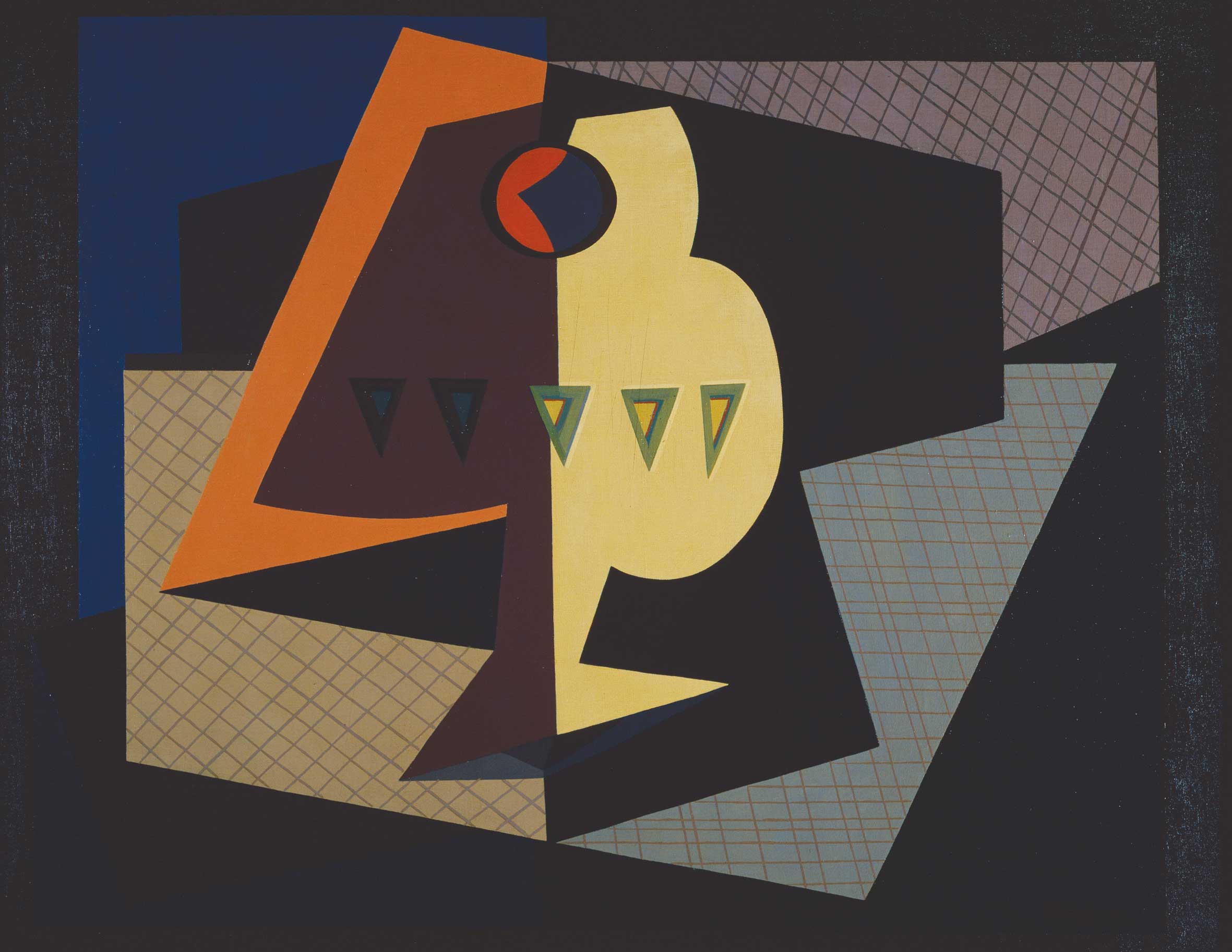
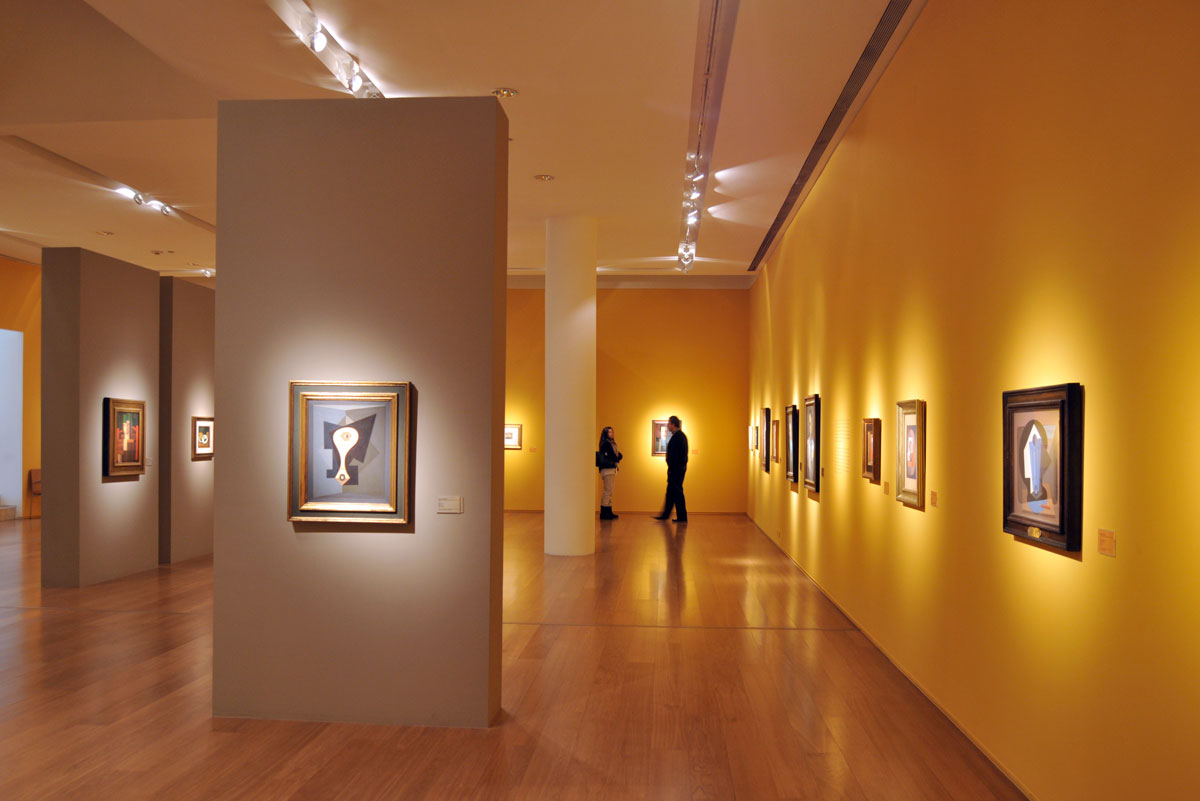
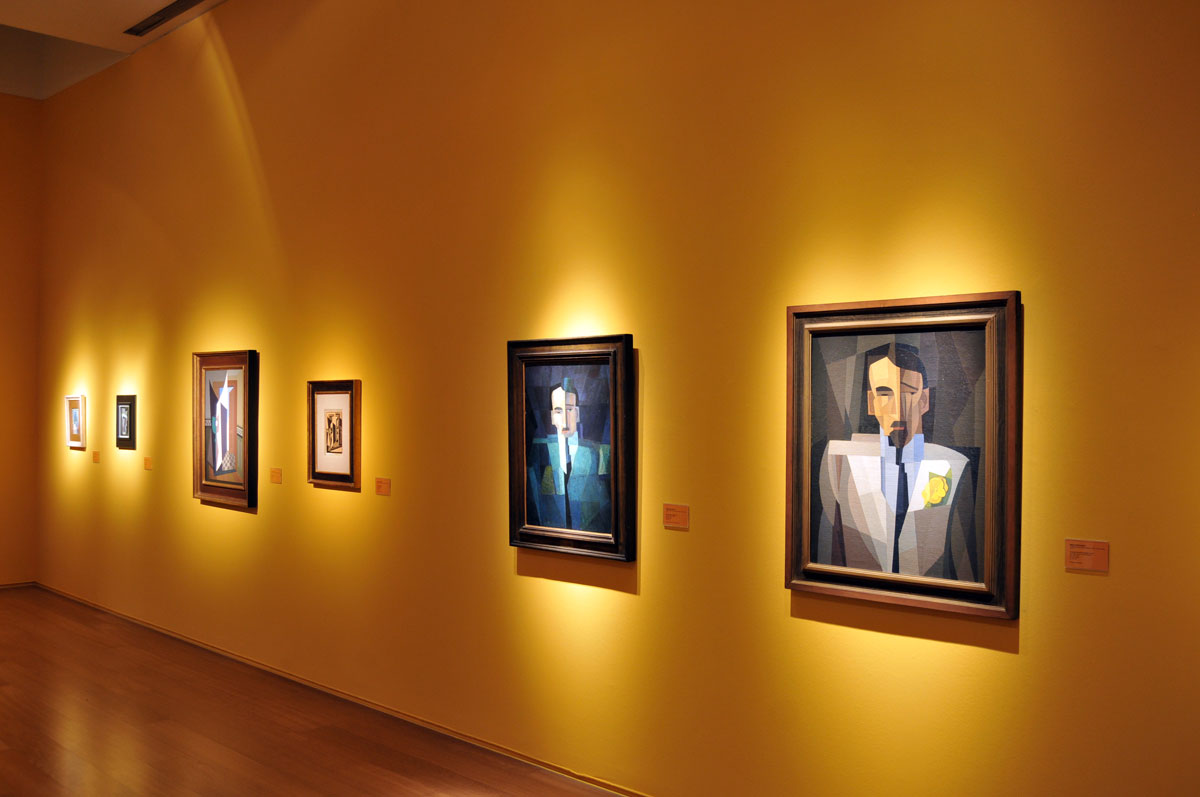
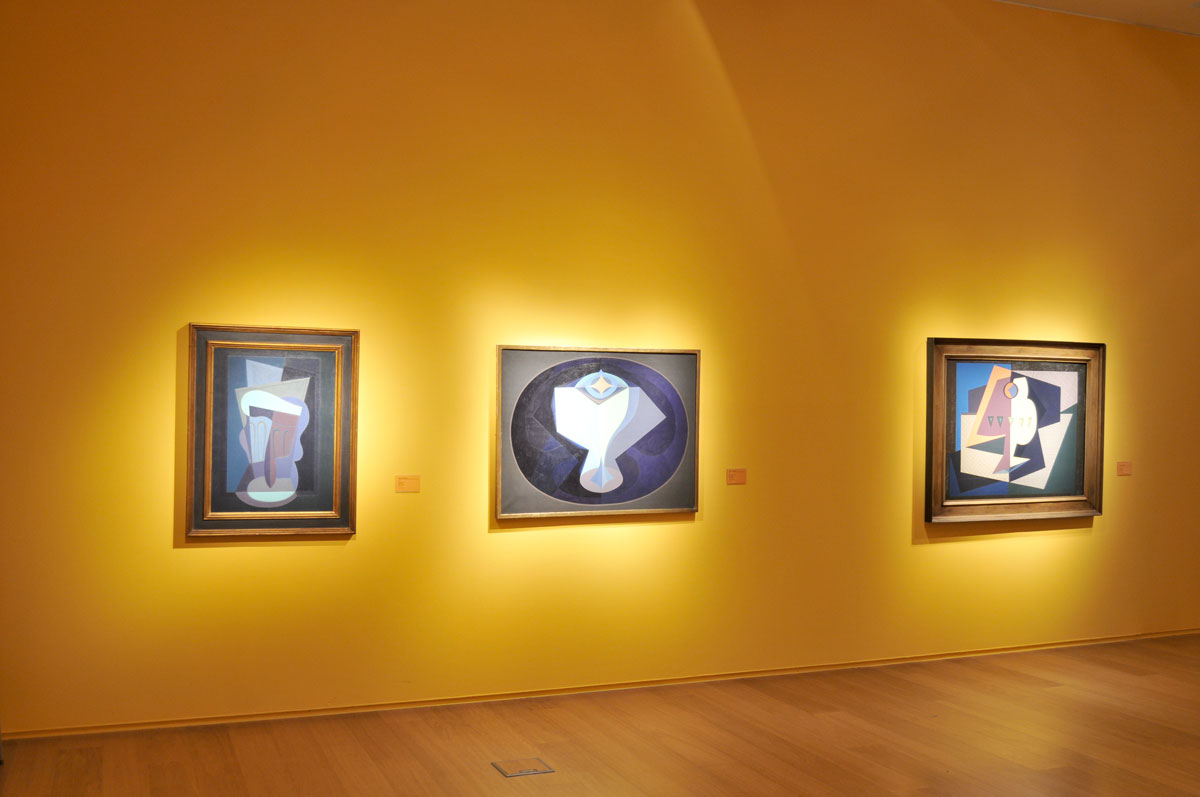
A selection of 37 works created by Argentine artist Emilio Pettoruti (1892–1971) during the first half of the 20th century. Curated by Patricia Artundo, this exhibition invites visitors to reconsider Pettoruti’s relationship with abstract art, which is essential to understanding much of his artistic output.
On display are collages, oil paintings, and watercolors created by the artist between 1914 and 1949, a period that spans his early years in Italy, his return to Argentina, and his subsequent travels through Europe before he settled permanently in Paris.
Forty years after his death, the aim is to reflect on what has been thought and written about Pettoruti in recent years. "To rediscover, through his works, his own reflective practice, characterized by the complexity, variety, and depth of his ideas”, says Artundo.
The works in the exhibition come from private and public collections, such as the National Museum of Fine Arts in Buenos Aires; the Eduardo Sívori Museum of Plastic Arts in Buenos Aires; the Castagnino + MACRO Museum in Rosario; the Emiliano Guiñazú Provincial Museum of Fine Arts (Casa de Fader) in Mendoza; the Emilio Pettoruti Provincial Museum of Fine Arts – Cultural Institute of La Plata; and the Argentine Foreign Ministry, Ministry of Foreign Affairs, International Trade, and Worship, among others.
Emilio Pettoruti
He was born on October 1, 1892, in the city of La Plata, in the province of Buenos Aires. He studied at the School of Fine Arts in La Plata and honed his drawing skills during his visits to the Natural History Museum in the same city. After taking a course in perspective, he began exhibiting his first works in the windows of the Gath & Chaves store and publishing them in the magazines La Ciudad and Rayos de Sol. In June 1911, he held his first exhibition in the halls of the now-defunct La Plata newspaper Buenos Aires.
In 1913, he moved to Florence, Italy, where he met other Argentine and Latin American artists. There, he soon abandoned his academic studies and devoted himself to observing the works of the great masters and studying various techniques. He worked for free in workshops specializing in mosaics, frescoes, stained glass, and gold leaf. In November 1913, the Esposizione Futurista “Lacerba” took place at the Gonnelli bookstore, through which he came into contact with Filippo T. Marinetti and other Florentine Futurists and avant-garde artists. In mid-1914, he produced his first abstract drawings, such as Force centripete, Espansione dinamica, and Movimento nello spazio. After conducting studies on light, he developed his own system centered on color, focusing on its relationships and harmonies through varying percentages of each hue. Between 1916 and 1917 he lived in Rome, where he befriended the artists of the avant-garde circle associated with the magazines Cronache d’Attualitá and Valori Plastici, including Enrico Prampolini, Giorgio De Chirico, and Carlo Carrà. He then settled in Milan, where he was admitted as a “socio pittore” to the Famiglia Artistica. During this period, he earned a living illustrating books, designing stained-glass windows, and creating set designs. He traveled to Vienna and several German cities, and in 1923 he exhibited at the Der Sturm gallery in Berlin.
In July 1924, he returned to Buenos Aires, where he joined the group associated with the newspaper Martín Fierro and held his first exhibition at the Salón Witcomb after an eleven-year absence: the eighty-six works on display caused quite a stir due to their avant-garde style, which drew on Futurism and Cubism. He also exhibited at the Müller Gallery and, together with Sarfatti, helped organize the Novecento Italiano exhibition at Amigos del Arte. In 1930, he was appointed Director of the Provincial Museum of Fine Arts in La Plata, a position he would hold until 1947. In 1934, he met María Rosa González, a Chilean photographer and art critic, whom he married in 1941. In 1935, he painted the oil painting Caminantes, which marked a new phase in his work. In 1937, he began a friendship with Julio E. Payró; in 1938, he debated with Antonio Berni regarding “new realism”; a year later, he became close to Jorge Romero Brest. In 1940, Amigos del Arte held a retrospective featuring forty-one works from 1917–1938. Major museums in the United States invited him to exhibit both individually and in group shows; in 1943, MoMA in New York purchased his work Copa verde-gris. In 1948, he held another retrospective at the Salón Peuser, and in 1950, the Exposición retrospectiva del pintor Emilio Pettoruti took place at the National Museum of Fine Arts in Chile. The following year he traveled through Europe, and in 1953 he settled in Paris, where he began his final phase as a painter. There he participated in the exhibitions Durand-Ruel (1954); Arte Abstracto, Las primeras Generaciones 1910–1939 at the Musée d’Art de Saint-Étienne (1957); 50 Años de Pintura Abstracta, organized by Michel Seuphor; and in other solo exhibitions that brought his work to the public in that city. In 1960, he participated in the Primera Exposición Internacional de Arte Moderno in Buenos Aires and Construction and Geometry in Painting, in New York. In 1961, he shared the exhibition Arte Abstracto Constructivo Internacional with the most important artists of the international abstract movement at the Galerie Denise-René in Paris. In 1966, he traveled to Argentina and completed his memoirs, published under the title Un pintor ante el espejo. He received the Guggenheim Continental Prize for the Americas in 1956 and, the following year, the Grand Prize awarded by the National Arts Fund. In his later years, he held exhibitions in Bonn, Berlin, Brussels, and Geneva, among other European cities, and represented Argentina in the delegation to the 11th São Paulo International Biennial in 1971. He died in Paris on October 16 of that same year.
Pettoruti and Abstraction
“To prevent the gaze of others—even through our own eyes—from defining us, it is important to explore in particular the formative years of our artists in order to find there the unique clues that will later pave the way for an alternative study of their later works. In Pettoruti’s case, when observing his works from 1914 onward, one notices a particular unity that would lead him precisely to distinguish himself from his European contemporaries”, analyzes Marcelo Pacheco in the essay “Emilio Pettoruti and the Search for a Strategy of His Own.”
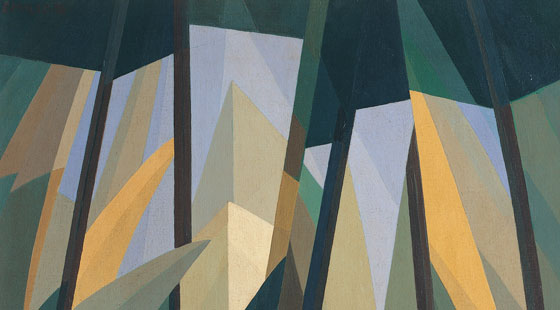
During his first stay in Europe, beginning in 1913, Pettoruti subverted the traditional apprenticeship—based on copying the works of the great masters—and set out to offer a fresh interpretation of their formal and compositional principles. “What he did was a study of color and its relationships and harmonies based on its proportional distribution on the plane. And this was one of the paths that led him to abstraction”, says Artundo. Another path that led the artist toward abstraction was his contact with the Futurists, their works, their publications and manifestos, and, through them, Synthetic Cubism. The series of charcoal drawings created between 1914 and 1916 is related to the explorations the Futurists had begun two years earlier and on which they continued to work.
While the landscape served as the testing ground for his work during the 1910s, the following decade marked a turning point with the emergence of a new subject: musicians. “Likewise, the issue of pure abstraction seemed to give way to other questions or, in any case, appeared to be related to others, following his line of inquiry, starting with Cubism in its definition by planes of color/light and the work on defining tonal keys that end up dematerializing and making it difficult to recognize natural forms”, explains Artundo.
Later, in the 1930s, the artist created a series of paintings with another common motif: glasses, which serve as a new canvas on which the artist explores his investigations into abstract painting. “Pettoruti does not work on themes—even when these are recognizable, as in the Portrait of the Poet Alberto Hidalgo(1925)—but rather on motifs that constitute the foundation upon which he conducts his explorations. Hence the apparent repetition and/or reiteration, when in reality what is at stake is the definition of matrices,” the curator maintains.
According to Artundo: “The painter moved with absolute freedom both within and outside the avant-garde. He was able to absorb everything and approach the Italian masters without prejudice in order to pursue a different kind of exploration that led him, by another path, to abstraction: the creation of chromatic maps based on the work of Beato Angelico; the generation of new compositional and spatial structures from his interpretation of Masaccio’s frescoes; the creation of tonal harmonies with the Venetians; and the exploration of light and its effect on surfaces, developed through the study of mosaic and stained-glass techniques,” she explains.
In the 1940s, Pettoruti returned to his preoccupation with studying the light inherent in his painting and questioned the very notion of representation by once again drawing on ambiguity. Later, between 1948 and 1952—before settling permanently in Paris—the artist reevaluated his body of work as a whole. Based on his new paintings (Crepúsculos marinos, Farfallas, Soles y Noches), he began to define himself as an “abstract painter.”
“However, at the heart of these new works—even though they represent a complete departure from his work of the previous decade—a close look reveals a continuous, reflective engagement with an issue that occupied him for much of his life,” concludes the curator.